
Soups & Stews
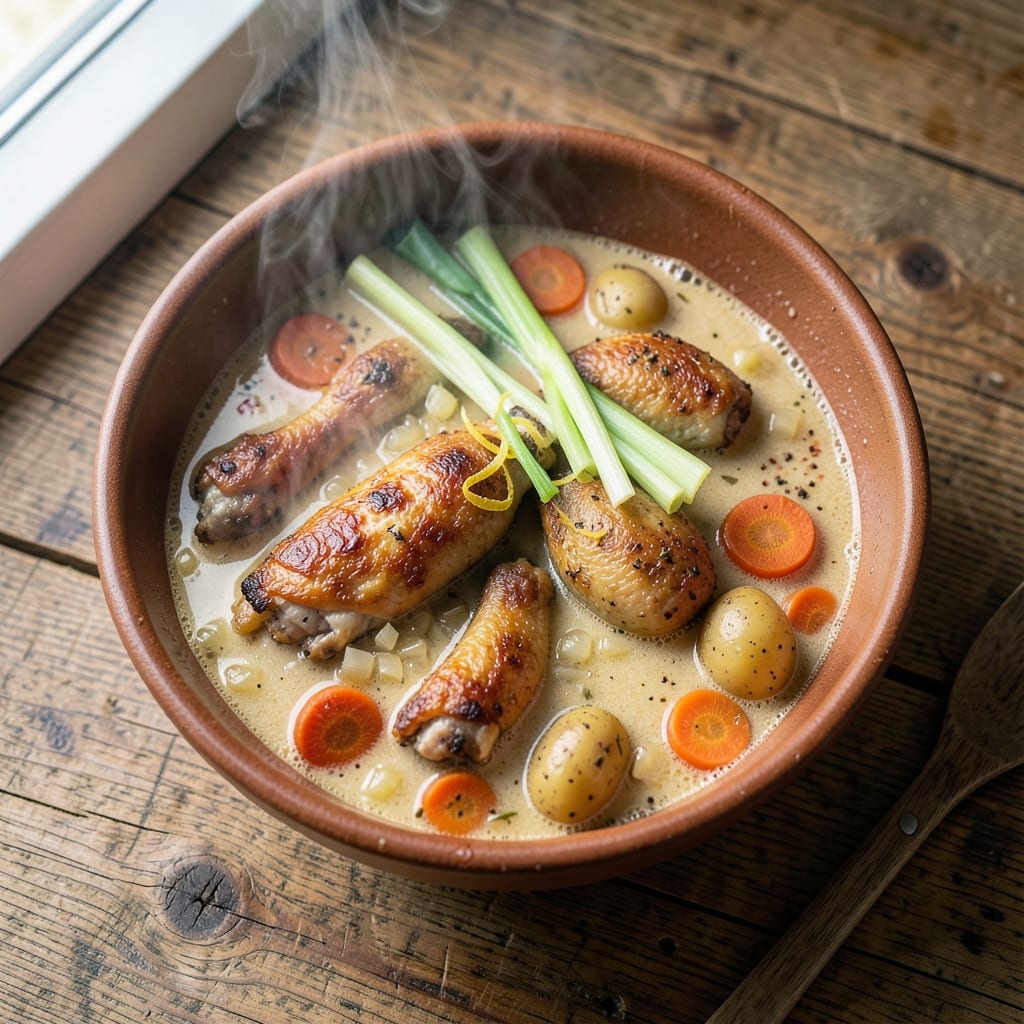
This Alpine Village Chicken Soup recipe brings the cozy warmth of mountain lodges to your kitchen with its rich, herbed broth and tender vegetables. The secret lies in slow-simmered chicken, aromatic herbs like thyme and bay leaf, and hearty Alpine roots that create a deeply satisfying bowl. I developed this recipe after years of perfecting the balance between rustic tradition and modern convenience—no fancy techniques, just pure comfort in every spoonful.
The foundation is a deeply flavorful broth built with chicken thighs and bones, simmered long enough to extract every last bit of savory goodness. Carrots, celery, and potatoes add natural sweetness and texture, while fresh herbs like parsley and dill brighten the dish at the end. What makes this recipe special is how it transforms simple ingredients into something that feels like a hug in a bowl—perfect for chilly evenings or when you need a taste of home.
By the time you're done, you'll have a steaming pot of soup with tender chicken pieces, perfectly cooked vegetables, and a broth so rich it coats every spoonful. The aroma alone will have everyone gathering around the table, and the first bite delivers that perfect combination of savory, herby, and slightly sweet flavors. This is the kind of soup that disappears quickly, leaving only empty bowls and happy faces behind.
Serve with crusty bread for dipping or a sprinkle of fresh herbs for extra freshness. The beauty of this recipe is its versatility—it works as a light lunch or a hearty dinner, and the leftovers reheat beautifully for days of mountain-inspired comfort. Let's get cooking!
Ingredients for alpine village chicken soup
Sixteen ingredients transform into a deeply comforting bowl of Alpine Village Chicken Soup.
| Ingredient | Amount | Notes |
|---|---|---|
| Chicken Thighs 🍗 | 2 ½ lb | Bone-in, skin-on preferred |
| Chicken Wings 🍗 | 1 ½ lb | For extra flavorful broth |
| Yellow Onions 🧅 | 2 whole | Chopped into 1-inch pieces |
| Carrots 🥕 | 4 medium | Peeled, cut into 1-inch chunks |
| Celery Stalks 🧅 | 4 whole | Trimmed, cut into 1-inch pieces |
| Russet Potatoes 🥔 | 2 lb | Peeled, cut into 1-inch cubes |
| Fresh Thyme 🌿 | 2 tbsp | Leaves only, chopped fine |
| Fresh Parsley 🌿 | ¼ cup | Chopped for garnish |
| Fresh Dill 🌿 | ¼ cup | Chopped for finishing |
| Bay Leaves 🌿 | 2 whole | Remove before serving |
| Garlic Cloves 🧄 | 6 cloves | Smashed, not minced |
| Vegetable Broth 💧 | 4 cups | Low-sodium preferred |
| Dry White Wine 🍷 | ½ cup | Sauvignon Blanc recommended |
| Salt 🧂 | 2 tsp | Kosher or sea salt |
| Black Peppercorns 🌶️ | 1 tsp | Freshly cracked |
The chicken is the heart of this soup—bone-in, skin-on thighs and wings create the richest broth. Costco or local butchers often have great deals on whole chicken parts, which you can trim yourself for maximum flavor. Look for pieces with good marbling and bright pink meat. The potatoes should be firm and starchy—Russets or Yukon Golds work best. If you can't find fresh thyme, dried thyme at one-third the amount works in a pinch, though fresh is ideal for that Alpine brightness.
No white wine? Extra vegetable broth with a splash of apple cider vinegar mimics the acidity perfectly. The carrots and celery can be swapped for turnips or parsnips if you're feeling adventurous—they add a lovely earthiness. Fresh herbs are worth the splurge here. Trader Joe's or Whole Foods usually have great bundles of parsley and dill. For the garlic, roasting the cloves first adds a sweet depth to the broth, but raw works fine too if you're short on time. The bay leaves are non-negotiable—they add that classic herbed depth.
This soup tastes even better the next day as flavors meld. Store in an airtight container for up to 5 days in the fridge or freeze for 3 months. I always make a double batch—one for dinner, one for lunches. The broth freezes beautifully, so portion it out in ziplock bags for quick reheating. For serving, warm crusty bread and a sprinkle of fresh herbs turn this into a full Alpine feast.
Why You'll Love This Recipe
- No-Chop Trick: This soup uses whole carrots and celery stalks—just trim the ends and drop them in. The onions get tossed in raw, no slicing required. Honestly, I’ve made it while scrolling through emails, and it still tastes like I slaved over it.
- Rich, Rustic Depth: The chicken thighs and wings render fat into the broth, turning it into something thick and satisfying. That crispy skin? You’ll want to eat it with a spoon. Between us, it’s the kind of soup that makes you forget about bland broths forever.
- Weeknight Workhorse: I’ve served it at family dinners, after-hike refuels, and even as a hangover cure. The leftovers reheat like a dream—no soggy veggies, just hearty, flavor-packed bites. (Yes, even on a Tuesday night.)
- Budget-Friendly Feast: Chicken thighs and wings stretch farther than breasts, and the veggies are pantry staples. I’ve fed six people for under $15 with this—no fancy ingredients, just honest, filling goodness. My wallet and my freezer both thank me.
Step-by-step instructions for Alpine village chicken soup
This hearty soup brings mountain comfort to your table with rich, herbed broth and tender chicken.
Brown the Chicken Thoroughly
Pat the 2.5 lb chicken thighs and 1.5 lb chicken wings dry with paper towels. Heat a large Dutch oven over medium-high heat and add the chicken in batches, skin-side down. Cook undisturbed for 8-10 minutes until the skin turns deep golden brown and crispy. Flip and cook another 5-6 minutes until fully browned on all sides.
This browning step creates the deep, caramelized flavor that forms the soul of the soup. I like to work in batches to avoid crowding the pot, which would steam the chicken instead of browning it. Transfer the browned chicken to a plate as you go.
Sauté the Vegetable Base
In the same Dutch oven, reduce heat to medium and add 2 whole yellow onions, 4 medium carrots, and 4 whole celery stalks—all chopped as specified. Cook for 8-10 minutes, stirring occasionally, until the vegetables soften and the onions become translucent. Add the 6 smashed garlic cloves and cook for 30 seconds until fragrant.
The vegetables should release their natural juices and develop a slight caramelization at the edges. This step builds the aromatic foundation of the soup. If the vegetables stick to the bottom, add a splash of 0.5 cup dry white wine to deglaze and scrape up those flavorful browned bits.
Simmer the Broth with Herbs
Pour in the 4 cups vegetable broth and bring to a boil. Add the 2 whole bay leaves, 2 tbsp fresh thyme, 2 tsp salt, and 1 tsp black peppercorns. Return the browned chicken to the pot, along with any accumulated juices. Reduce heat to low and simmer uncovered for 45 minutes, skimming any foam that rises to the surface.
This simmering time allows the chicken to become fork-tender while infusing the broth with deep, herby flavor. The bay leaves and thyme will release their essential oils, creating that alpine aroma. Don't skip skimming the foam—it prevents a cloudy broth and keeps the soup clean.
Add Potatoes and Finish Cooking
Add the 2 lb russet potatoes, cut into 1-inch cubes, and simmer for 20-25 minutes until the potatoes are fork-tender and the chicken easily pulls apart at the bone. Remove the bay leaves and discard them. Stir in the 0.25 cup fresh dill and 0.25 cup fresh parsley during the last 5 minutes of cooking to brighten the flavors.
You'll know the potatoes are done when they pierce easily with a fork and the broth has thickened slightly. The chicken should be falling off the bone, and the vegetables should be tender but still hold their shape. Taste and adjust seasoning with additional salt if needed.
Serve with Fresh Herbs
Ladle the soup into bowls, garnishing each serving with additional fresh parsley and fresh dill. Serve immediately with crusty bread to soak up every last drop of that comforting broth. The soup should be rich with tender chicken, hearty vegetables, and a bright herbal finish that reminds you of a cozy alpine village.
This soup tastes even better the next day as the flavors meld further. Store leftovers in an airtight container in the refrigerator for up to 3 days or freeze for 3 months. The herbs will keep the soup vibrant and full of mountain charm.
Pro Tips For Making Alpine Village Chicken Soup
- Brown the Wings First: Chicken wings burn faster than thighs, so hit them first over medium-high heat—skin-side down, no crowding—until they’re deep golden and crisping. I learned this the hard way when my first batch turned out pale and rubbery; now I give them 8-10 minutes alone before adding thighs.
- Cut Celery into Matchsticks: Skip the rough chop—slice celery into thin matchsticks (about 1/8-inch) so it softens evenly without turning to mush. Thick chunks always linger like sad, crunchy afterthoughts, and no one wants that in a soup meant to melt into comfort.
- Simmer Low and Slow: Once everything’s in the pot, drop the heat to a bare simmer—just enough to see tiny bubbles at the edges—and resist the urge to crank it up. I used to rush this, and the soup would split or taste harsh; now I let it work its magic for at least 45 minutes.
- Salt the Water Generously: Toss the chicken into salted water from the start—about 1 tablespoon per quart—so the meat seasons through while it cooks. I was skeptical until I tried it; now I can’t imagine making broth any other way. (Yes, even if you’re using store-bought stock, a pinch extra makes a difference.)
Essential equipment for this recipe
Dutch Oven Essentials
A heavy-gauge Dutch oven is your best friend for this recipe—it distributes heat evenly and handles the long simmer beautifully. I swear by the Lodge 5.5-quart Dutch oven with lid, which retains heat perfectly and has that classic cast iron durability. For a lighter option, Le Creuset's enameled Dutch oven (5.5 quarts) offers the same performance without the heavy weight. If you're on a budget, Amazon Basics' cast iron Dutch oven works well too, though you'll need to season it first. 🔥
Knife & Cutting Tools
Invest in a sharp 8-inch chef's knife for chopping onions, carrots, and celery efficiently. I use a Wüsthof Classic for precision, but any high-quality knife with a comfortable handle will do. A cutting board with non-slip feet (like OXO Good Grips) prevents skidding while you prep. For the potatoes, a potato peeler and a mandoline (if you're feeling fancy) make quick work of uniform cubes. 💡
Measuring & Skimming Tools
Accurate measurements matter for balance, so grab a stainless steel measuring cup set (like OXO Good Grips) for broth and wine. A fine-mesh skimmer (I use Cuisinart's stainless steel skimmer) helps remove foam during simmering without losing broth. Don’t forget a wooden spoon—it won’t scratch your Dutch oven like metal utensils. For herbs, a small pair of kitchen shears makes quick work of chopping parsley and dill. ✨
Thermometer & Storage
A meat thermometer ensures your chicken reaches 165°F safely. The Thermoworks Smoke is my go-to for precision, but even a basic instant-read thermometer works. For storage, glass Pyrex containers with snap-on lids keep leftovers fresh, while ziplock freezer bags (for broth) save space in the freezer. Label everything with dates to track freshness—trust me, you’ll thank yourself later. 💫
Optional Upgrades
Want to elevate your setup? A microplane adds depth by grating garlic directly into the pot, and a garlic press speeds up prep. For presentation, a ladle with a strainer (like OXO Good Grips) makes serving clean and precise. If you love crusty bread, a baguette slicer ensures even cuts for dipping. These extras aren’t mandatory, but they make the process smoother and the results even more impressive. 🌟
Nutrition facts
Frequently asked questions
Why do you use chicken thighs and wings instead of just breasts?
The bone-in, skin-on thighs and wings create the richest, most flavorful broth possible. The skin crisps beautifully and adds depth, while the bones release collagen that thickens the broth naturally. Chicken breasts would make a lighter soup but miss that alpine comfort factor.
Can I make this soup in a slow cooker?
Brown the chicken first in a skillet, then transfer everything to a 6-quart slow cooker. Cook on low for 6-7 hours or high for 3-4 hours, adding potatoes in the last hour. The slow cooker enhances the broth's depth even more. Just skip the skimming step—it's not needed in a slow cooker.
What if I don't have fresh herbs like thyme or dill?
Use dried herbs at one-third the amount (so ⅔ tsp dried thyme instead of 2 tbsp fresh). For dill, dried dill works in a pinch, but fresh parsley alone can still brighten the soup. If you're missing both, a splash of lemon juice at the end adds brightness. The soup will still taste amazing!
How do I know when the chicken is fully cooked?
The chicken is done when it reaches 165°F internally and the meat pulls away from the bone easily. For thighs, this usually happens during the 45-minute simmer. If you're unsure, use a meat thermometer—it's the most reliable way. The wings should also be tender and crispy at the edges.
Can I make this soup gluten-free?
Yes! Just ensure your vegetable broth is gluten-free (check the label) and use gluten-free bread for serving. All other ingredients in this recipe are naturally gluten-free. The soup's rich flavors will shine even without gluten-containing elements.