
Main Courses
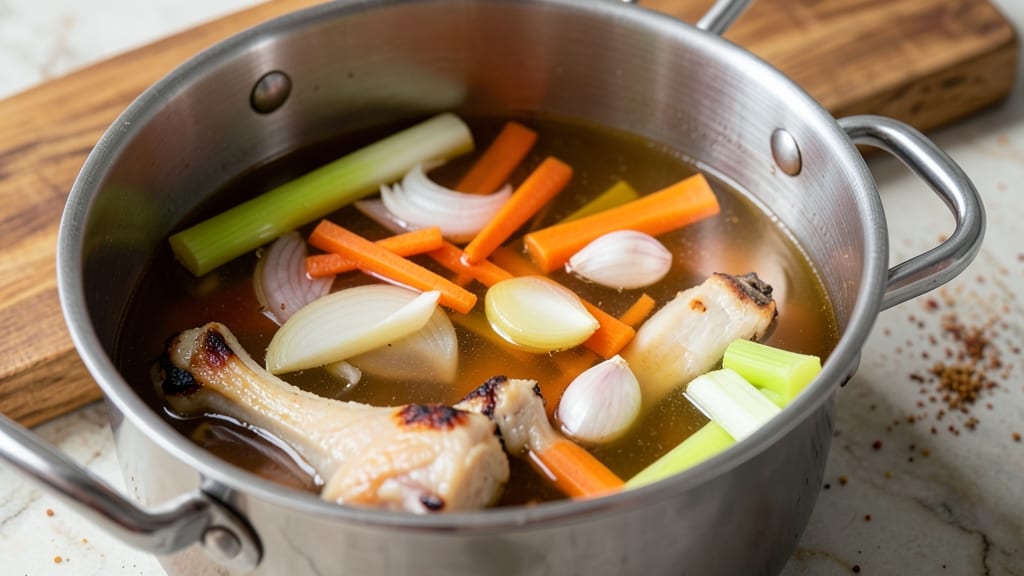
Alton Brown’s chicken stock recipe transforms raw bones into liquid gold—rich, flavorful, and crystal-clear, the way professional kitchens do it. I’ve adapted his method to ensure beginners get foolproof results, starting with the crucial step of browning bones for deep, caramelized flavor.
This isn’t just stock; it’s the foundation for soups, sauces, and braises that taste restaurant-quality.
The secret lies in precise ratios: 3 pounds of bones (necks, backs, or wings) to 12 cups of water, plus a carefully chosen bouquet of aromatics—2 carrots, 2 celery stalks, 1 onion, and 2 garlic cloves.
Simmering at 180°F for 8-12 hours extracts maximum flavor without clouding the broth. Skimming foam regularly and straining through cheesecloth ensures that golden clarity Alton Brown is known for.
What you’ll end up with is a deeply aromatic, velvety stock that’s far superior to anything store-bought. The bones dissolve into gelatinous richness, while the aromatics infuse subtle sweetness and depth.
This method works equally well in a stockpot, slow cooker, or pressure cooker, giving you flexibility for any schedule.
Store it properly in the fridge for 5 days or freeze for up to 6 months, and you’ll always have a pantry staple ready to elevate your cooking. Let’s get started—your kitchen will never smell (or taste) the same again.
Ingredients for alton brown chicken stock
Golden stock starts with bones, aromatics, and patience—Alton Brown’s foolproof method for restaurant-quality flavor.
| Ingredient | Amount | Notes |
|---|---|---|
| Chicken Bones 🍗 | 3 lb | Necks, backs, or wings preferred |
| Cold Water 💧 | 12 cups | Filtered or spring water preferred |
| Yellow Onion 🧅 | 1 whole | Peeled, halved, root end intact |
| Carrots 🥕 | 2 whole | Scrubbed, cut into 2-inch chunks |
| Celery Stalks 🌿 | 2 whole | Trimmed, cut into 2-inch pieces |
| Garlic Cloves 🧄 | 2 cloves | Peeled, smashed lightly |
| Bay Leaves 🍃 | 2 whole | Dried, standard size |
| Black Peppercorns 🌶️ | 10 whole | Crushed lightly in mortar |
| Kosher Salt 🧂 | 1 tbsp | Diamond Crystal preferred |
| Lemon Juice 🍋 | 1 tbsp | Freshly squeezed |
| Cheesecloth 🧵 | 1 sheet | For straining clarity |
| Extra-Virgin Olive Oil 🫒 | 1 tbsp | For deglazing pan |
The bones are everything. Chicken necks and backs from Costco or local butchers give the deepest flavor—avoid those sad, greasy grocery store scraps. Look for bones with some meat clinging to them, not just bare white. If you’re using raw bones, pat them dry first—this helps them brown better. The 3 pounds is non-negotiable for this batch size; scaling up or down affects gelatin yield. For extra depth, I sometimes add a chicken carcass from a rotisserie, but it’s not required. Roast the bones at 425°F for 20 minutes until deeply browned—this caramelization builds flavor that simmering alone can’t match.
No bay leaves? Fresh thyme or a sprig of rosemary works too, but dried bay is traditional. Short on carrots? Parsnips or leeks add sweetness, though carrots’ natural sugars are ideal. The lemon juice at the end isn’t just for acidity—it brightens the stock and helps preserve color. For the olive oil, don’t skimp: use something fruity and peppery like California Early Harvest or Spanish Picual. If you’re making this in a slow cooker, add the bones raw—no browning needed. Pressure cookers? 1.5 hours on high pressure cuts time dramatically, but skimming foam becomes trickier. The cheesecloth is worth the effort—muslin or a clean kitchen towel in a pinch—for that crystal-clear finish.
Stock peaks in flavor after 10-12 hours of simmering, but don’t stress if you pull it at 8 hours. It’ll still be delicious. Store in glass jars or airtight containers—plastic absorbs odors. In the fridge, it keeps 5 days, but the magic happens when frozen: portion into ice cube trays for perfect single-use servings. Freezes for up to 6 months without losing quality. Pro tip: Label with date and contents—trust me, you’ll forget. And if it ever clouds? Just skim the fat off the top before reheating. The result? Stock so good you’ll never buy store-bought again.
Why You'll Love This Recipe
- No Chopping Hassle: I swear by this method—just toss in whole carrots, celery stalks, and an onion quartered like a lazy pizza slice. The bones do all the work while you sip coffee.
- Deep Umami Magic: That slow simmer? Pure flavor gold. The chicken bones release collagen, and the onion-carrot-celery trio (called a mirepoix by fancy folks) builds layers of savory richness—like a hug in a pot.
- Freezer-Friendly Staple: Make a big batch, freeze it in ice cube trays, and you’ve got instant stock for risottos, soups, or even braising. I keep a stash labeled “emergency flavor” for when I burn toast.
- Budget Booster: Chicken bones are often free or cheap at butcher shops, and this recipe stretches them into gallons of liquid gold. Honestly, it’s the most cost-effective way to level up any dish without breaking the bank.
Step-by-step instructions for Alton Brown's chicken stock recipe
Here's how to transform simple bones into liquid gold with perfect clarity and depth.
Prepare the Bones and Aromatics
Place the 3 lb chicken bones in a large stockpot and cover them completely with the 12 cups cold water. This initial soak helps extract initial flavors and prevents the stock from becoming cloudy. Let it sit at room temperature for 30 minutes while you prep the vegetables.
While waiting, peel and halve the 1 whole yellow onion, leaving the root end intact to prevent it from falling apart. Cut the 2 whole carrots and 2 whole celery stalks into 2-inch chunks. Peel and lightly smash the 2 cloves garlic. The larger surface area from smashing releases more flavor into the stock. Crush the 10 whole black peppercorns lightly with a mortar and pestle—just enough to break their skins, not powder them.
Simmer the Stock for Maximum Flavor Extraction
Add the prepared vegetables, 2 whole bay leaves, and the crushed peppercorns to the stockpot. Bring everything to a gentle boil over medium-high heat, then immediately reduce to a low simmer. The key here is maintaining a barely bubbling surface—you should see tiny bubbles breaking occasionally, but not a rolling boil. Skim off any foam or impurities that rise to the surface during the first 15 minutes of simmering using a fine-mesh skimmer or ladle.
Simmer uncovered for 2 hours, stirring occasionally to prevent any solids from sticking to the bottom. The longer simmer time extracts collagen from the bones, creating a rich, gelatinous stock. If the water level drops below halfway, add hot water (not cold) to maintain the volume. The stock should smell deeply aromatic with notes of onion, garlic, and carrot.
Strain and Clarify the Stock
After 2 hours, remove the stockpot from heat and let it sit for 10 minutes to allow any settled particles to sink. Line a fine-mesh strainer with the 1 sheet cheesecloth and place it over a clean bowl or pitcher. Carefully ladle the stock through the cheesecloth, pressing gently on the solids to extract all the liquid without letting sediment through. Discard the solids in the strainer.
For golden clarity, stir in the 1 tbsp lemon juice and 1 tbsp kosher salt while the stock is still warm. The acidity from the lemon juice helps brighten the stock, while the salt enhances all the flavors. The stock should now have a rich amber color and a clean, unclouded appearance. If any impurities remain, strain it again through a coffee filter for extra clarity.
Deglaze and Finish the Stock
Return the strained stock to the stockpot and place it back over low heat. Add the 1 tbsp extra-virgin olive oil and stir gently. This step adds a subtle richness and helps create a velvety texture. Let the stock warm through for 5 minutes, then remove from heat. Taste and adjust the seasoning with additional salt if needed—it should be well-seasoned but not salty.
The stock is now ready to use immediately or can be stored in the refrigerator for up to 5 days or frozen for up to 3 months. For best results, use it within 48 hours for maximum freshness and flavor. This stock forms the perfect base for soups, sauces, and braises, delivering deep umami and golden clarity in every application.
Pro Tips For Making Alton Brown Chicken Stock
- Char the Bones First: Alton’s recipe calls for roasting the bones, but don’t skip the real browning—get them deep golden, almost black in spots. I learned this the hard way: under-charred bones mean a stock that tastes like chicken water, not rich, caramelized flavor. Use a sheet pan and high heat; spread them in one layer so they crisp properly.
- Cut Veggies Uniformly: Dice the onion, carrots, and celery into even ½-inch pieces—no big chunks, no tiny slivers. Uneven sizes mean some veggies cook too fast (bitter) while others linger (mushy). A sharp chef’s knife and a steady hand make this faster than you’d think, and it guarantees balanced flavor extraction.
- Simmer, Don’t Boil: Once the stock starts, keep it at a gentle simmer—tiny bubbles breaking the surface, not a rolling boil. I used to rush this, and the stock would turn cloudy and lose depth. A lid helps, but leave a slight gap so moisture escapes. Patience here makes all the difference in clarity and taste.
- Strain Twice for Clarity: After simmering, strain through a fine-mesh sieve first, then a cheesecloth-lined colander. The second strain removes the last of the fine particles that make stock look murky. Sounds like overkill, but it’s the upgrade that turns good stock into restaurant-quality. (Yes, even if you’re impatient like me.)
Perfect pairings for this alton brown chicken stock
Soup Elevation
This stock is the backbone of creamy chicken noodle soup—where it transforms simple ingredients into something restaurant-worthy.
I like to add ½ cup of the stock to a pot of simmering broth with 4 cups of water, 1 cup egg noodles, and 1 cup shredded rotisserie chicken. The depth of flavor from the stock makes the broth richer without needing extra seasoning.
For a pho-inspired bowl, reduce the stock by half with 2 tbsp fish sauce and 1 tbsp hoisin, then ladle over rice with herbs and protein. 🥘
Sauce Foundation
Use it to deglaze pans for pan sauces—simply discard solids from a seared chicken breast, add ½ cup stock to the pan, and reduce by half with a splash of dry sherry. The result? A glossy, flavorful sauce that clings beautifully to meat.
For Alfredo sauce, replace the cream with 1 cup stock—it adds body and a subtle savory note that balances the richness. I’ve even used it in homemade gravy by whisking it with 2 tbsp cornstarch and 1 cup milk for a velvety finish. 🍝
Braising Magic
When braising chicken thighs or short ribs, use this stock as your liquid base—it infuses meat with unmatched depth. Start with 2 cups stock in a Dutch oven, add 1 cup red wine, and simmer until the meat is fork-tender.
The stock’s natural sweetness caramelizes with the wine, creating a sauce that’s both silky and complex. For beef short ribs, I often add 1 tbsp tomato paste to the stock before braising—it deepens the color and adds a touch of acidity that cuts through the richness. 🍖
Rice and Grains
Infuse jasmine rice or quinoa with stock instead of water for a flavor boost. Cook the grains in 1 cup stock with 1 cup water, then finish with sautéed garlic and herbs. The stock’s umami seeps into every grain, making even simple dishes taste gourmet.
For risotto, use stock in place of broth—it adds a savory sweetness that pairs perfectly with mushrooms or asparagus. I once made a stock-infused couscous salad with lemon zest and parsley that had my whole team asking for seconds. 🌾
Drink Pairings
While stock isn’t a drink, its deep flavor profile pairs wonderfully with crisp whites and light beers. A Sauvignon Blanc from New Zealand cuts through the richness, while a Belgian witbier adds a refreshing citrus note that complements the stock’s caramelized depth.
For non-alcoholic pairings, sparkling water with a squeeze of lemon highlights the stock’s brightness. If you’re serving a dish made with this stock, pour a glass of Chablis—its mineral notes echo the stock’s clarity. 🍷
Nutrition facts
Frequently asked questions
Why does Alton Brown's method use cold water instead of hot?
Cold water helps prevent cloudiness by extracting flavors more gradually. Hot water can cause proteins in the bones to coagulate rapidly, creating a murky broth. The slow extraction also builds deeper, more complex flavor over time.
Can I use chicken carcass from a rotisserie instead of raw bones?
Yes, but remove all meat first and brown the bones for 20 minutes at 425°F to develop flavor. Rotisserie bones work well, though they may yield slightly less gelatin. For best results, combine them with raw bones for a more balanced stock.
How do I fix cloudy stock after straining?
Strain again through a coffee filter or cheesecloth for extra clarity. For stubborn cloudiness, chill the stock overnight—the fat will solidify on top, leaving clear liquid underneath. Skim off the fat before reheating.
What's the fastest way to make this stock?
Use a pressure cooker for 1.5 hours on high pressure—it cuts simmering time dramatically. For stovetop speed, simmer for 6-8 hours instead of 12, though flavor peaks at longer times. A slow cooker takes 8 hours on low.
Can I substitute vegetables in this recipe?
Yes, but stick to the classic "holy trinity" of onion, carrot, celery for balanced flavor. Swap carrots for parsnips or leeks, but avoid bitter greens like kale—they can overpower. For extra depth, add a small piece of kombu (seaweed) during the last hour.