
Main Courses
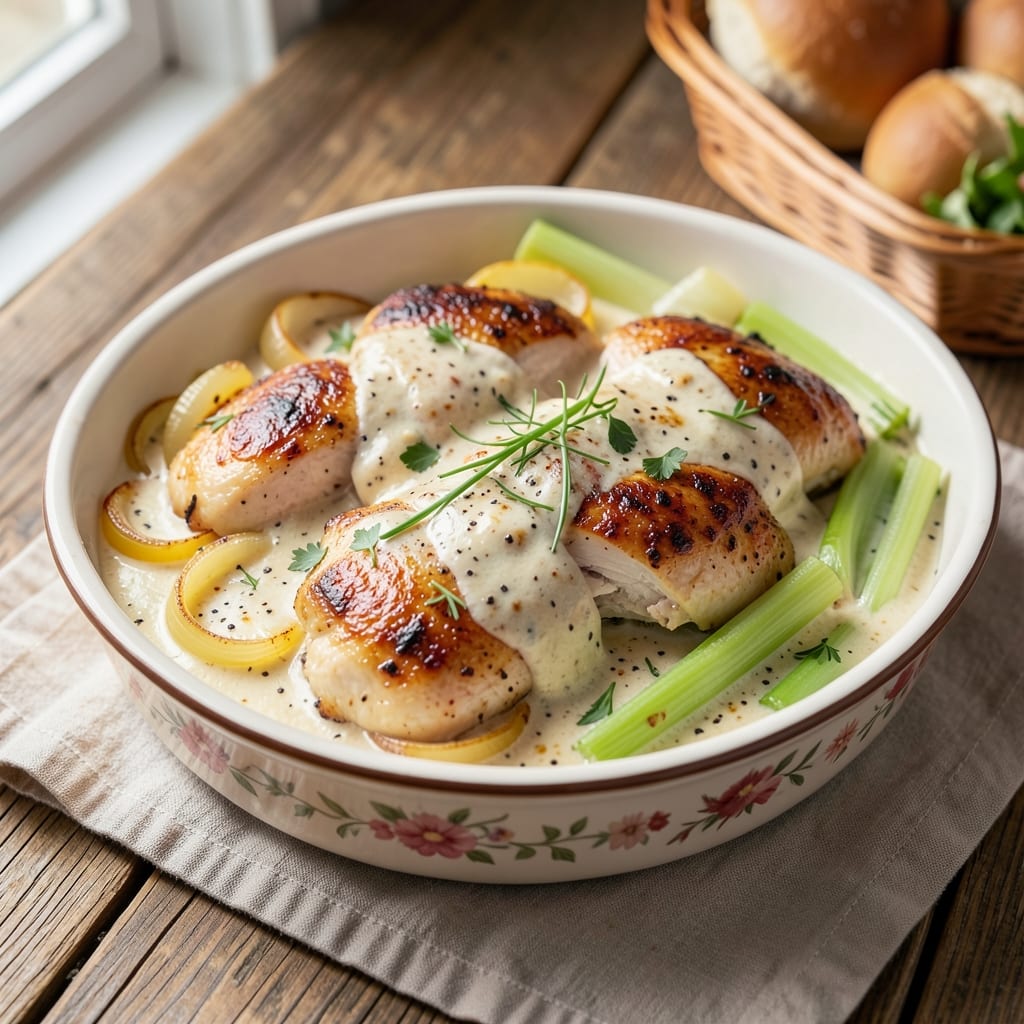
This Amish creamed chicken recipe delivers the comforting, creamy perfection of a classic homestyle meal with crispy celery bites that add satisfying texture. The secret lies in slow-cooking tender chicken until it practically falls apart, then enveloping it in a rich, velvety sauce made with just a few simple ingredients. What sets this dish apart is the crisp-tender celery that gets perfectly cooked in the sauce—no soggy bites here, just that satisfying crunch in every mouthful.
The foundation of great Amish creamed chicken is patience—letting the chicken simmer gently in its own juices before blending with the creamy sauce. This method ensures the meat stays moist and flavorful while developing deep, savory notes. The sauce itself is a perfect balance of creaminess and tang, thanks to a touch of vinegar and mustard that brightens the richness without overpowering the chicken's natural flavor. It's the kind of dish that tastes even better the next day as the flavors meld together.
By the time you serve this dish, you'll have golden-brown chicken swimming in a glossy, creamy sauce with crispy celery bits peeking through. The aroma alone will have everyone gathering at the table, and the first bite delivers that perfect combination of tender meat, velvety sauce, and satisfying crunch. This is comfort food at its finest—simple enough for a weeknight dinner but impressive enough for company.
The beauty of this recipe is how well it pairs with traditional Amish sides like fluffy mashed potatoes, buttery biscuits, or steamed green beans. The creamy chicken stands up beautifully to these classics, making it a complete meal that feels both hearty and balanced. Let's get cooking—your taste buds will thank you.
Ingredients for amish creamed chicken
Pantry staples meet homestyle comfort—just twelve ingredients for creamy perfection.
| Ingredient | Amount | Notes |
|---|---|---|
| Boneless Chicken Thighs 🍗 | 1 ½ lb | Skin-on preferred for flavor |
| Yellow Onion 🧅 | 1 whole | Medium size, diced |
| Celery Stalks 🥬 | 3 whole | Cut into 1/4-inch pieces |
| All-Purpose Flour 🌾 | ½ cup | For thickening sauce |
| Heavy Cream 🥛 | 1 cup | Full-fat for richness |
| Chicken Broth 💧 | 1 ½ cups | Low-sodium preferred |
| White Vinegar 🍶 | 1 tbsp | For tangy brightness |
| Dijon Mustard 🌶️ | 1 tbsp | For depth of flavor |
| Salt 🧂 | 1 ½ tsp | Kosher or sea salt |
| Black Pepper 🌶️ | ½ tsp | Freshly ground preferred |
| Butter 🧈 | 2 tbsp | Unsalted for control |
| Fresh Parsley 🌿 | ¼ cup | Chopped for garnish |
The chicken thighs are non-negotiable here—skin-on delivers the best flavor, and they stay juicier during slow cooking. Trader Joe's or Costco often have great prices on bone-in, skin-on thighs, which you can trim yourself. Look for pieces with good marbling and vibrant color. Celery should be crisp with no brown spots—organic celery from the store's fresh produce section stays crunchier during cooking. The onion is just a supporting player, but a yellow or sweet onion adds subtle sweetness that complements the creamy sauce beautifully.
No heavy cream? Full-fat coconut milk works in a pinch, though the flavor will be slightly different. Short on chicken broth? Low-sodium vegetable broth is a fine substitute. The Dijon mustard is key for that tangy depth—if you only have regular mustard, use half the amount. For the flour, all-purpose works best, but if you've got cornstarch, use half the quantity for a glossier sauce. Fresh parsley is ideal, but dried parsley at one-third the amount will do if you're out. The butter should be unsalted to control the seasoning perfectly.
This dish tastes even better the next day, so make extra if you can—it reheats beautifully. Store leftovers in an airtight container for up to 4 days in the fridge. For longer storage, freeze portions for up to 3 months. The celery stays crispier if you add it back to the sauce just before serving, so keep it separate until the end. If you're prepping ahead, cook the chicken and sauce separately, then combine when ready to serve for maximum texture.
Why You'll Love This Recipe
- One-Pot Magic: I swear by this recipe—just brown the chicken, toss in the onions and celery, coat it all in flour, then pour in the cream. One pot, minimal cleanup, and zero stress. The heavy cream thickens right into that velvety sauce without extra fuss.
- Creamy Crisp Contrast: That golden, flour-crisped chicken with the silky cream sauce? It’s the best of both worlds. The thighs stay juicy while the edges get that satisfying crunch—no dry bites here.
- Leftovers That Shine: This dish actually tastes better the next day. I’ll be honest, I make it on Sundays just so I can reheat portions all week. The flavors meld perfectly, and it’s a lifesaver for busy nights.
- Budget-Friendly Feast: Chicken thighs stretch further than breasts, and the simple veggies (onion, celery) add depth without costing a fortune. A big batch feeds four for under $15—comfort food that won’t break the bank.
Step-by-step instructions for Amish creamed chicken
Transform simple ingredients into a rich, velvety sauce with tender chicken and crisp-tender celery.
Prepare the Chicken and Vegetables
Pat the 1.5 lb boneless chicken thighs dry with paper towels and season generously with 1 tsp salt and ¼ tsp black pepper on both sides. This drying step ensures crispy skin when seared. In a large skillet, melt 1 tbsp butter over medium-high heat until foaming, then add the chicken. Cook for 5-6 minutes per side until golden brown and cooked through to an internal temperature of 165°F.
While the chicken cooks, dice the 1 whole yellow onion into ¼-inch pieces and cut the 3 whole celery stalks into ¼-inch pieces. These vegetables will add texture and depth to the creamed sauce. Set them aside for the next step.
Build the Creamy Sauce Base
In the same skillet, reduce heat to medium and add the remaining 1 tbsp butter. Toss in the diced onion and celery, cooking for 5-6 minutes until softened and the celery begins to crisp slightly at the edges. This is where the classic Amish texture comes in—those crisp-tender celery pieces add a satisfying bite.
Sprinkle the 0.5 cup all-purpose flour over the vegetables and stir vigorously for 1 minute to cook off the raw flour taste. Gradually whisk in the 1.5 cups chicken broth and 1 cup heavy cream, stirring continuously to prevent lumps. The mixture should begin to thicken immediately. If it's too thick, add 2-3 tablespoons of water to reach a smooth, pourable consistency.
Finish with Tangy Depth
Return the cooked chicken to the skillet and spoon the creamy sauce over it. Stir in the 1 tbsp white vinegar and 1 tbsp Dijon mustard, then bring the mixture to a gentle simmer. Let it cook for 3-4 minutes until the sauce has thickened slightly and the flavors meld together. The vinegar adds a subtle tang that balances the richness, while the mustard deepens the flavor profile.
Taste and adjust seasoning with additional ½ tsp salt or ¼ tsp black pepper if needed. The sauce should be creamy, flavorful, and just thick enough to coat the back of a spoon. If you prefer a smoother texture, strain the sauce through a fine-mesh sieve before serving.
Garnish and Serve
Transfer the creamed chicken to a serving dish and garnish with 0.25 cup chopped fresh parsley. The parsley adds a fresh contrast to the rich, creamy sauce. Serve immediately over buttered egg noodles, mashed potatoes, or crusty bread to soak up every last bit of that velvety goodness.
This dish delivers on the promise of crispy celery bites while maintaining the creamy, comforting texture that makes Amish creamed chicken a classic. The key is balancing the cooking times—don't overcook the celery or it will turn mushy, and don't rush the sauce reduction or it will separate.
Pro Tips For Making Amish Creamed Chicken
- USE COLD CREAM: The heavy cream needs to be ice cold when you stir it into the roux—trust me, I’ve tried it warm, and it turns into glue. Pour it in slowly while whisking like you’re making a snow angel in a bowl, or you’ll end up with lumps that scream "rushed cook."
- SWEAT THE AROMatics: Don’t chop the onion and celery into tiny confetti—cut them into ¼-inch pieces so they soften but don’t disappear. Cook them low and slow for 8–10 minutes until translucent, or they’ll turn to mush and ruin the texture. (Yes, even if you’re impatient like me.)
- DON’T OVERCOOK THE CHICKEN: Thighs are forgiving, but if you let them sit in the creamy sauce too long, they’ll turn rubbery. Pull them out at 165°F and let them rest 5 minutes—this keeps them juicy while the sauce thickens. Skipping the rest? You’re asking for dry bites.
- SKIP THE MEASURING CUPS: For the flour roux, use a kitchen scale—2 tablespoons by volume can vary wildly. Weigh it out (about 25g) for a smoother, less grainy sauce. I was skeptical until I tried it; now I won’t go back.
Wine and beer pairings for this recipe
White Wine Classics
For Amish creamed chicken, a crisp Chardonnay from California or a Sauvignon Blanc from New Zealand cuts through the richness beautifully. I love a Chardonnay with light oak—just enough to complement the creamy sauce without overpowering it. The acidity in these whites refreshes your palate between each velvety bite. 🍷
Red Wine Options
If you prefer red, go for a light-bodied Pinot Noir from Oregon or a Gamay from Beaujolais. These wines have enough fruitiness to stand up to the chicken while keeping the meal balanced. Avoid heavy reds like Cabernet Sauvignon—they’ll clash with the creamy sauce.
Beer Pairings
A pilsner or lager like Peroni or Budweiser is perfect for balancing the richness. The crisp, clean flavors cleanse your palate between bites of creamy chicken. For a craft option, try a Belgian witbier—its citrusy notes pair surprisingly well with the mustard and vinegar in the sauce. 🍺
Non-Alcoholic Choices
For a refreshing non-alcoholic option, serve sparkling apple cider or ginger beer. The effervescence and slight tartness mirror the creamy sauce’s depth while keeping things light. A cold glass of lemonade with fresh mint also works beautifully for a refreshing contrast.
Regional Specialties
If you’re serving this dish in the Midwest, where Amish cuisine originated, a local craft cider or amber ale from regional breweries adds a nostalgic touch. For a Southern twist, try a sweet tea—the sugar balances the creamy richness perfectly. The key is matching the drink’s brightness to the dish’s depth. ✨
Nutrition facts
Frequently asked questions
Can I use chicken breasts instead of thighs?
While you can substitute chicken breasts, thighs are ideal for this recipe because they stay juicier and more tender during slow cooking. If using breasts, cut them into smaller pieces and cook them for 3-4 minutes per side to ensure they're fully cooked through. The texture will be slightly leaner, so consider adding an extra 1/4 cup heavy cream to maintain richness.
Why does my celery turn mushy?
The celery becomes mushy when overcooked—it should only cook until crisp-tender, about 5-6 minutes. Remove it from the pan when it's still slightly firm but softened. For extra crunch, add the celery back to the sauce just before serving. If your celery is already too soft, try using frozen celery (thawed) in future batches—it holds up better.
Can I make this recipe ahead of time?
This dish actually tastes better the next day! Cook the chicken and sauce separately, then combine when ready to serve. Store leftovers in an airtight container for up to 4 days in the fridge. Reheat gently on low heat, stirring occasionally, and add fresh parsley and celery just before serving to maintain texture. For longer storage, freeze portions for up to 3 months.
What are the best sides for Amish creamed chicken?
Classic Amish sides include buttery egg noodles, fluffy mashed potatoes, or steamed green beans. For a complete meal, pair with homemade cornbread or biscuits to soak up the creamy sauce. The contrast of soft sides with the rich chicken makes every bite perfect.
How do I fix a sauce that's too thick or too thin?
For a too-thick sauce, whisk in 1-2 tablespoons of warm chicken broth or water gradually until smooth. If the sauce is too thin, mix 1 teaspoon of flour with 1 tablespoon of cold water to make a slurry, then stir it in while heating gently. Always stir continuously to prevent lumps. The ideal consistency should coat the back of a spoon but still be pourable.