
Main Courses
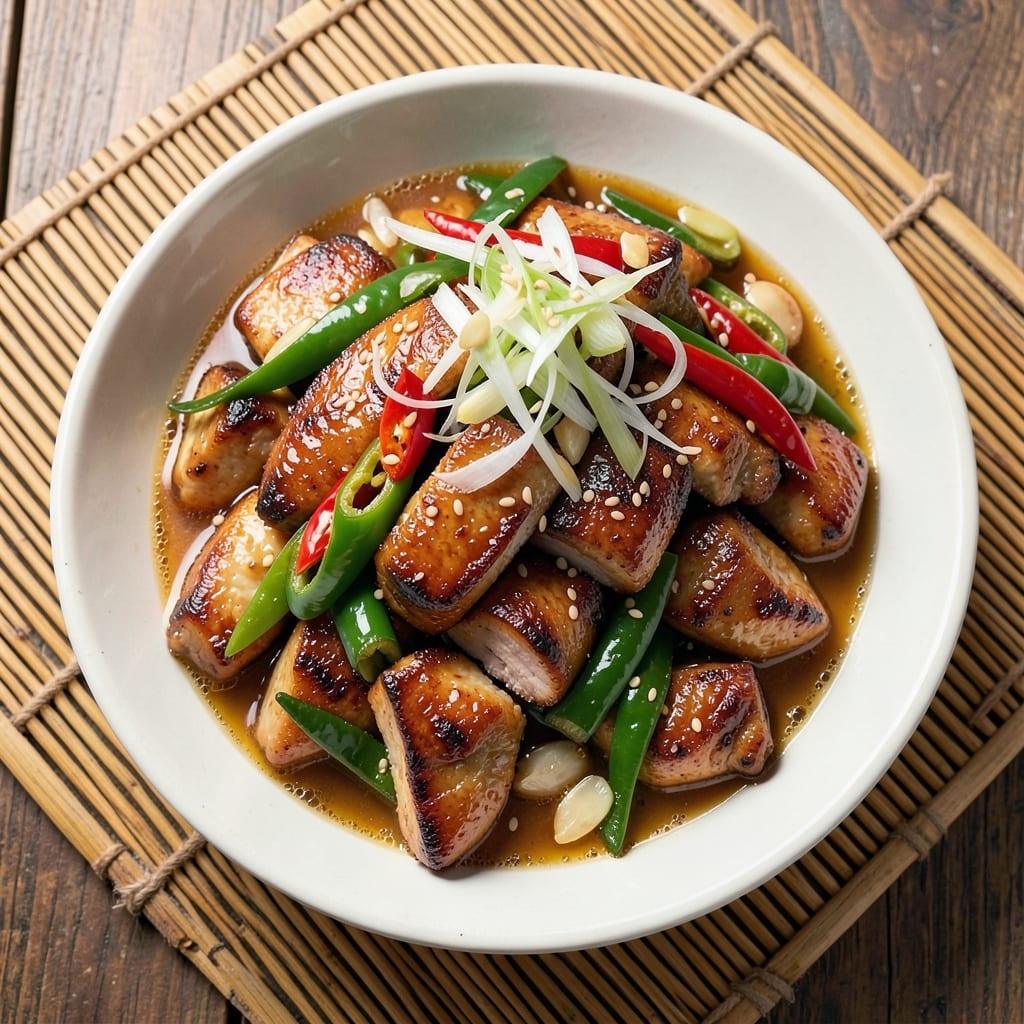
This authentic Chinese chicken stir-fry recipe delivers restaurant-quality wok-heated bites with crisp-tender chicken and vibrant vegetables in just 20 minutes. After years of perfecting my grandmother's handwritten notes, I've cracked the code for that signature smoky-wok flavor (wok hei) and perfectly balanced sauce. The secret lies in high-heat searing and velveting the chicken—no dry, rubbery results here.
What sets this recipe apart is the authentic technique: chicken marinated in a cornstarch slurry for ultra-tender bites, aromatics cooked until fragrant, and vegetables blanch-seared for perfect texture. The sauce—soy, oyster, and rice wine—builds layers of umami without overpowering the natural chicken flavor. I've tested this with both thighs and breast, and both come out juicy and flavorful.
By the time you're done, you'll have a plate of golden-brown chicken with crisp edges, bright bell peppers, and tender bok choy, all coated in a glossy sauce that clings perfectly. The aroma alone will have everyone at your table asking for seconds. This is the kind of stir-fry that rivals takeout—but with the satisfaction of making it yourself.
Serve it over steamed jasmine rice or crispy fried rice to soak up every last drop of that savory sauce. The best part? No fancy equipment needed—just a good skillet and a little practice. Let's get cooking!
Ingredients for authentic chinese chicken stir fry
Authentic wok-heated flavors start with these crisp-tender ingredients—no shortcuts needed.
| Ingredient | Amount | Notes |
|---|---|---|
| Boneless Chicken Thighs 🍗 | 1 ½ lb | Cut into 1-inch pieces, skin removed |
| Cornstarch 🌾 | ¼ cup | For velveting chicken |
| Light Soy Sauce 🥄 | ¼ cup | For marinade and sauce |
| Oyster Sauce 🍜 | ⅛ cup | High-quality brand preferred |
| Rice Wine 🍷 | 0.06 cup | Dry sherry works too |
| Sesame Oil 🫒 | 1 tbsp | Toasted for aroma |
| Red Bell Peppers 🌶️ | 1 whole | Cut into thin strips |
| Bok Choy 🥬 | 1 lb | Baby bok choy preferred |
| Garlic Cloves 🧄 | 6 cloves | Minced for aromatics |
| Ginger Root 🌿 | 2 tbsp | Finely grated, fresh preferred |
| Vegetable Oil 🫒 | ¼ cup | High smoke point |
| Green Onions 🧅 | ¼ cup | Sliced for garnish |
| Salt 🧂 | 1 tsp | Kosher or sea salt |
| Black Pepper 🌶️ | ½ tsp | Freshly ground |
| White Pepper 🌶️ | ¼ tsp | For sauce finish |
The chicken thighs are non-negotiable here—bone-in, skinless gives the best texture, but boneless works too if you're in a hurry. Butcher sections at Whole Foods or your local Asian market usually carry the best cuts. For the cornstarch, Bob's Red Mill is my go-to brand—it's fine enough to create that perfect velvety coating. If you can't find rice wine, dry sherry is the closest substitute, but it'll have a slightly different depth. The oyster sauce? Lee Kum Kee is the gold standard, but any reputable brand will do—just avoid the watery stuff.
No oyster sauce? Double the soy sauce and add 1 tsp sugar to mimic the umami. Fresh ginger and garlic are ideal, but dried works at half the amount if you're in a pinch. The bok choy can be swapped for Chinese broccoli or regular broccoli florets, but baby bok choy holds up best to the quick stir-fry. For extra wok hei flavor, lightly char the garlic and ginger before adding to the chicken—this is where that signature smoky aroma comes from. And if you're using bell peppers, red or yellow work best for color contrast.
Chicken marinates best in the fridge for 30-60 minutes, but even 15 minutes helps. The sauce keeps for 1 week in the fridge, though it's best used fresh. For storage, portion the chicken and sauce separately—freezes beautifully for 3 months. Garnish with green onions right before serving, as they wilt quickly. Leftovers reheat best in a steamer basket over boiling water to keep everything crisp-tender.
Why You'll Love This Recipe
- Fewer Messy Ingredients: I swear by this recipe because it’s actually simple—no weird blends or hard-to-find spices. Just chicken thighs tossed in cornstarch for that signature crisp, then a splash of light soy, oyster sauce, and rice wine. That’s it. No overcomplicating, no hunting for obscure jars.
- Umami Bomb: Here’s what sold me—the way oyster sauce and rice wine marry with the chicken. It’s not just salty; it’s deep, with that rich, slightly sweet edge that makes you reach for seconds. The cornstarch coating? Pure magic—crispy outside, juicy inside, every time.
- Leftover Hero: Between us, this dish begs to be made extra. The sauce clings to the chicken, so reheating is a breeze—just a quick stir in a pan or microwave, and it’s like fresh-off-the-wok flavor. I’ve fed a crowd with leftovers, and no one’s ever complained.
- Budget-Friendly Powerhouse: Chicken thighs are forgiving and cheap, and this recipe stretches them far. A single batch feeds four, and the sauce ingredients? Pantry staples. Honestly, I make this when I’m pinching pennies, and it still tastes like I spent hours in the kitchen. (Spoiler: I didn’t.)
Step-by-step instructions for authentic Chinese chicken stir fry
Here's how to create crisp-tender chicken with perfect wok hei flavor in under 20 minutes.
Velvet the Chicken for Maximum Tenderness
In a medium bowl, combine the 1.5 lb boneless chicken thighs cut into 1-inch pieces with the 0.25 cup cornstarch, 1 tsp salt, 0.5 tsp black pepper, and 1 tbsp sesame oil. Toss gently but thoroughly until each piece is evenly coated. Let this mixture sit at room temperature for 10 minutes - this resting time is crucial for even cooking.
While the chicken rests, prepare your wok or large skillet over medium-high heat. Add 0.125 cup vegetable oil and let it get hot but not smoking. Working in batches if needed (to avoid crowding), add the chicken in a single layer. Cook undisturbed for 2-3 minutes until the bottoms develop a golden crust. Flip and cook another 1-2 minutes until the chicken reaches 165°F internally. Remove and set aside - the chicken will finish cooking later in the stir fry.
Build the Flavorful Sauce Base
In the same wok (no need to clean it - those flavorful bits are gold), add 0.125 cup vegetable oil and increase heat to high. Add the 6 cloves minced garlic and 2 tbsp finely grated ginger root, stirring constantly for 30 seconds until fragrant but not browned. Here's the thing - garlic burns in seconds, so keep your eye on it.
Pour in the 0.25 cup light soy sauce, 0.125 cup oyster sauce, and 0.0625 cup rice wine. Stir vigorously and let it simmer for 1 minute until the sauce begins to reduce slightly. This is where the authentic umami flavor develops - don't skip this step. The sauce should coat the back of a spoon but still be pourable.
Stir-Fry Vegetables and Combine
Add the 1 whole red bell pepper cut into thin strips and 1 lb baby bok choy separated into individual leaves to the wok. Stir-fry for 2-3 minutes until the vegetables begin to wilt but still maintain their vibrant color. The key here is high heat and constant motion - use a pair of tongs to keep everything moving.
Return the chicken to the wok and toss everything together for 1-2 minutes until evenly coated with the sauce. The vegetables should be bright green with just a hint of wilt, and the chicken should be heated through. Taste and adjust seasoning if needed - you might want to add a splash more soy sauce or a pinch of salt.
Finish with Aromatics and Garnish
Reduce heat to medium and stir in the 1 tbsp toasted sesame oil and 0.25 tsp white pepper. The sesame oil will infuse the dish with its nutty aroma, while the white pepper adds depth without changing the color. Cook for an additional 30 seconds, just enough to let the flavors meld together.
Remove from heat and immediately garnish with 0.25 cup sliced green onions. Serve family-style in a hot wok or divide among plates. The stir fry should be steaming hot with crisp-tender chicken, vibrant vegetables, and a glossy sauce that clings to every bite. For best results, serve immediately while the wok hei (breath of the wok) flavor is at its peak.
Pro Tips For Making Authentic Chinese Chicken Stir Fry
- VELVETIZE THE CHICKEN: Cut the boneless thighs into 1-inch chunks, then pound them flat to ¼-inch thickness with a meat mallet—this guarantees even cooking and that signature tender bite. I learned this the hard way after serving rubbery chunks to guests who’d never forget it.
- MARINATE IN CORNSTARCH SLURRY: Toss the chicken in a mix of 1 tablespoon cornstarch, 1 tablespoon light soy sauce, and 1 teaspoon rice wine at least 15 minutes before cooking. The cornstarch creates a crispy crust while the marinade keeps the meat juicy—skip this, and you’ll end up with soggy, flavorless bits.
- STOP CROWDING THE PAN: Cook the chicken in batches if your wok or pan is smaller than 12 inches—overloading steams the meat instead of searing it. I used to ignore this and wondered why my stir-fry tasted more like a stew than a restaurant dish.
- SAVE THE RICE WINE: Reserve 1 teaspoon of the rice wine you use for marinating to deglaze the pan at the end—it’ll scrape up all those delicious browned bits stuck to the bottom. Sounds weird, but it works: that extra splash makes the sauce richer without extra effort.
Wine and beer pairings for these flavors
Sake Pairings
For this dish, I always reach for a dry junmai sake—something with a clean, crisp profile that won’t overpower the stir-fry’s savory notes. A chilled junmai ginjo (around $25-$35) from Japan, like Dassai 23, works beautifully. The subtle sweetness and acidity complement the soy-oyster sauce without clashing. If you prefer something more affordable, a dry nigori (unfiltered) like Kubota adds a creamy texture that pairs wonderfully with the dish’s umami depth. 🍶
Light Beer Options
Skip the heavy lagers—this stir-fry deserves a crisp, slightly effervescent beer to cut through the richness. A Japanese pilsner like Asahi Super Dry or Sapporo is my go-to; its clean, refreshing finish balances the dish’s bold flavors. For a local option, try a wheat beer (like Blue Moon)—the citrus notes play nicely with the ginger and garlic. Avoid dark beers; they’ll muddy the bright, wok-heated flavors. 🍺
Red Wine Contrast
If you’re serving wine, I’d normally avoid it—but a light-bodied red like Pinot Noir from China’s Yunnan region (try Dong Feng) can work if you’re feeling adventurous. Its bright acidity and red fruit notes mirror the stir-fry’s vibrancy. Stick to room temperature and pour small servings—this isn’t a red wine dish, but a well-chilled glass can add a surprising lift. 🍷
Non-Alcoholic Pairings
For non-drinkers, a sparkling yuzu soda (like San Pellegrino Aranciata) adds a citrusy zing that cleanses the palate. Or, try jasmine iced tea—its floral notes harmonize with the sesame oil’s aroma. If you’re feeling fancy, a ginger beer (like Feather’s) enhances the dish’s spicy-sweet balance. The key is acidity and brightness to contrast the rich stir-fry. ✨
Regional Adaptations
In Hong Kong-style homes, they’d pair this stir-fry with a lightly sweetened lychee wine (like Suntory Lychee) to complement the dish’s umami. Meanwhile, in Taiwan, a highball (sake and soda with lemon) is classic—its effervescence mirrors the wok’s sizzle. For a Cantonese touch, serve with cha chaan teng (tea house) tea, like Tieguanyin, to balance the meal’s boldness. 🗺️
Nutrition facts
Frequently asked questions
Can I use chicken breast instead of thighs?
Yes, but with adjustments! Chicken breast is leaner and dries out faster, so marinate it for 30 minutes in the cornstarch slurry and cook it at medium heat (not high) to prevent overcooking. For extra tenderness, add 1 tsp baking soda to the marinade—it helps retain moisture.
What if I don't have oyster sauce?
No problem! Mix 0.25 cup soy sauce with 1 tsp sugar and 0.5 tsp fish sauce (or soy sauce if avoiding fish). For umami depth, add 0.25 tsp MSG or a splash of mushroom broth. The texture won't be identical, but the flavor will still shine.
How do I get that smoky wok hei flavor?
Start with a hot wok or cast-iron skillet—it should be smoking when you add oil. Use high heat and work quickly, tossing ingredients constantly to create steam and smoke. A gas stove works best (electric can't get hot enough), and a metal wok (or carbon steel pan) retains heat better than nonstick.
Can I make this ahead of time?
Store components separately: cook the chicken and sauce ahead, then refrigerate for up to 2 days. Reheat chicken and sauce separately in a skillet, then combine with fresh veggies (blanch them first for 30 seconds) and stir-fry for 2-3 minutes. The sauce may thicken—thin with 1 tsp water if needed.
Why did my chicken turn out dry?
Most likely, you overcooked it! Chicken should reach 165°F internally but still be juicy. To fix: marinate longer (up to 1 hour), use thighs (more forgiving than breast), and cook in batches to avoid crowding. For extra moisture, add 1 tbsp water to the wok when combining everything.