
Main Courses
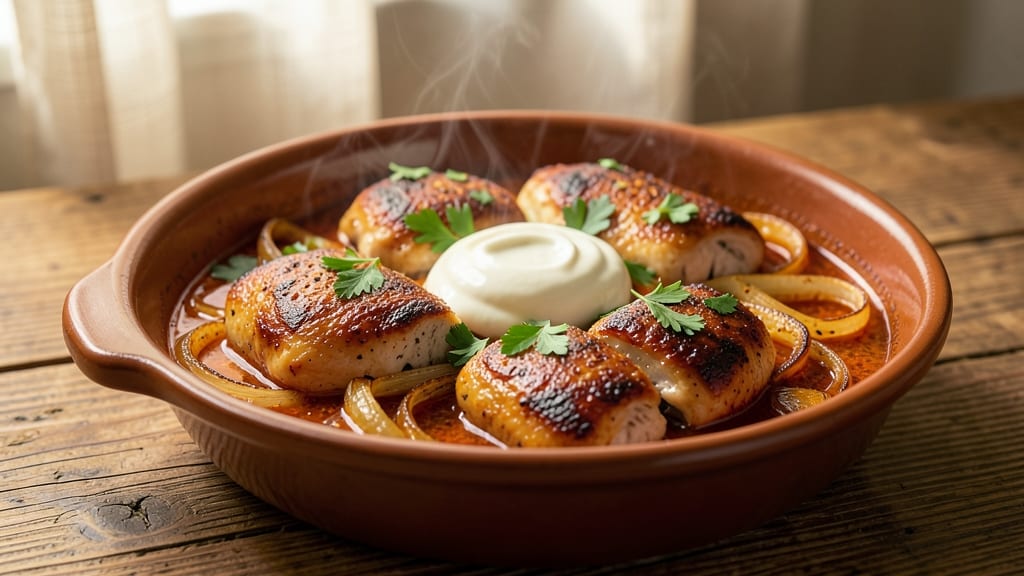
This authentic Hungarian chicken paprikash recipe brings the rich, smoky flavors of Budapest straight to your kitchen, where tender chicken simmers in a deep, velvety sauce infused with sweet paprika and sour cream. 💫 My grandmother's handwritten notes—written in her precise but intuitive way—revealed the secrets to balancing the spices just right, a technique I've perfected over years of testing.
The key lies in slow-cooking the onions until they're caramelized and letting the paprika bloom in the fat before adding liquid, creating layers of flavor that transform simple ingredients into something extraordinary.
The beauty of this dish is in its simplicity once you understand the foundational steps: browning the chicken, building the paprika base, and simmering the sauce until it reaches that perfect consistency—thick enough to coat the chicken but still silky smooth.
Traditional Hungarian cooking relies on patience, allowing flavors to meld gradually rather than rushing through the process. This method delivers restaurant-quality results without requiring advanced techniques, making it accessible for home cooks who want authenticity without complexity.
By the time you serve this dish, your kitchen will smell like a Budapest bistro, and every bite will deliver tender chicken swimming in a sauce that's rich, slightly tangy, and deeply aromatic.
The sour cream adds a creamy contrast to the smoky paprika, while fresh parsley brightens the dish at the end. This is comfort food at its finest—warm, satisfying, and full of the kind of flavor that stays with you long after the last bite.
Serve it with crusty bread or egg noodles to soak up every delicious drop.
What makes this recipe truly special is how it captures the soul of Hungarian cuisine without shortcuts. The slow simmering process develops depth in the sauce, while the careful balance of sweet and sour elements creates harmony.
Whether you're preparing it for a family dinner or a special occasion, this dish will impress with its authenticity and rich, complex flavors. Let's get cooking!
Ingredients for authentic hungarian chicken paprikash
Simple ingredients, rich flavors—this paprikash brings Budapest to your kitchen with just 14 staples.
| Ingredient | Amount | Notes |
|---|---|---|
| Boneless Chicken Thighs 🍗 | 1 ½ lb | Skin-on preferred for flavor |
| Yellow Onions 🧅 | 2 whole | Medium size, sliced thin |
| Sweet Hungarian Paprika 🌶️ | 2 tbsp | Essential for authentic flavor |
| Garlic Cloves 🧄 | 4 cloves | Minced, fresh preferred |
| Tomatoes 🍅 | 2 whole | Medium, peeled and chopped |
| Sour Cream 🥛 | ½ cup | Full-fat for creaminess |
| Fresh Parsley 🌿 | ¼ cup | Chopped, for garnish |
| Extra-Virgin Olive Oil 🫒 | ¼ cup | For blooming paprika |
| Chicken Broth 💧 | 1 ½ cups | Low-sodium preferred |
| Bay Leaves 🌿 | 2 whole | Fresh for best flavor |
| Salt 🧂 | 1 ½ tsp | Kosher or sea salt |
| Black Pepper 🌶️ | ½ tsp | Freshly ground preferred |
| All-Purpose Flour 🌾 | 1 tbsp | For thickening sauce |
| Lemon Juice 🍋 | 1 tbsp | Freshly squeezed |
The paprika is non-negotiable here. Sweet Hungarian paprika from Penzeys or the bulk section at Whole Foods makes all the difference—it's sweeter and more aromatic than regular paprika. The chicken thighs? Skin-on, bone-in if you can find them (they add flavor), but boneless works fine. For onions, yellow onions caramelize beautifully—skip the red or white. The tomatoes should be ripe but firm; San Marzano canned tomatoes are perfect if you're short on time. Bay leaves add subtle earthiness, so don't skip them.
No Hungarian paprika? Smoked paprika plus a pinch of sugar gets you close, but it won't be the same. Fresh parsley wilted? Dried parsley at half the amount works in a pinch. The sour cream needs to be full-fat—low-fat turns out grainy. Short on chicken broth? Water plus 1 tsp chicken bouillon is fine. The flour is just for thickening—if you're gluten-free, use cornstarch instead. Lemon juice brightens everything, but if you're out, a splash of white wine works too (though it'll change the flavor slightly).
This sauce tastes even better the next day—make extra for leftovers. Store in an airtight container in the fridge for 4-5 days or freeze for 3 months. I like to portion it into containers with a scoop of egg noodles on top for easy lunches. The paprika stains everything, so wear an apron—trust me on this one.
Why You'll Love This Recipe
- One-Pan Magic: I swear by this recipe—just brown the chicken, toss in the onions and paprika, then let it simmer. No extra pots, no fuss. The thighs get tender while the onions caramelize right in the same pan, and honestly? That’s where the real flavor lives.
- Paprika Powerhouse: That jar of sweet Hungarian paprika isn’t just an ingredient—it’s the star. A single teaspoon transforms everything: smoky, slightly sweet, with just enough kick to make your taste buds sit up. Mix it with the tomatoes and garlic, and you’ve got a sauce that’s dangerously addictive.
- Weeknight to Dinner Party: I make this for lazy Tuesdays (yes, even on a Tuesday night) and it still feels special. Double the batch, add some egg noodles, and suddenly you’ve got a dish that tastes like you slaved over it for hours. My in-laws think I’m a genius when I bring it to gatherings.
- Leftovers That Don’t Let You Down: Between us, most paprikash leftovers end up in sandwiches or fried rice—but not this version. The sauce thickens perfectly, clinging to the chicken like a cozy blanket. Store it for three days, and it only gets better, especially reheated with a splash of cream or a sprinkle of fresh parsley. Budget-friendly? Absolutely. Reliable? Even more so.
Step-by-step instructions for authentic Hungarian chicken paprikash
Here's how to create a rich, smoky paprikash that captures Hungary's soul in every bite.
🍳 Step 1: Sear the Chicken for Deep Flavor
Heat a large Dutch oven over medium-high heat and add 2 tablespoons extra-virgin olive oil. Once shimmering, add the 1.5 lb boneless chicken thighs, skin-side down if using skin-on pieces. Let them sear undisturbed for 4-5 minutes until golden brown on one side.
Flip the chicken and cook another 3-4 minutes until the second side is golden. You're not cooking through yet—just creating that beautiful crust that holds all the paprika flavor. Remove chicken and set aside on a plate. Here's the thing—don't clean the pot yet. Those browned bits are flavor gold.
👨🍳 Step 2: Bloom the Paprika for Maximum Flavor
In the same Dutch oven, reduce heat to medium and add 2 whole yellow onions, sliced thin. Cook for 5-6 minutes until softened and beginning to caramelize. Add the 4 cloves minced garlic and cook for 30 seconds until fragrant.
This is where the magic happens: Add the 2 tablespoons sweet Hungarian paprika and stir constantly for 1-2 minutes until it darkens and smells deeply aromatic. The paprika should coat the onions completely—this creates that signature smoky flavor. If it burns (watch closely), you've lost that beautiful sweetness.
🍳 Step 3: Build the Paprika Sauce
Stir in the 2 whole peeled and chopped tomatoes, 1.5 teaspoons salt, and 0.5 teaspoon black pepper. Cook for 3-4 minutes until the tomatoes break down into the sauce. Add the 1.5 cups chicken broth and 2 whole bay leaves, scraping up all those browned bits from the bottom.
Return the chicken to the pot, skin-side up. Bring to a gentle simmer, then reduce heat to low. Cover and let it cook for 25-30 minutes until the chicken is fork-tender. The sauce should be thick and rich—this is where patience pays off. Stir occasionally, but not too much—you want that rustic texture.
🥘 Step 4: Finish with Sour Cream and Fresh Herbs
Remove the chicken and strain the sauce through a fine-mesh sieve to remove bay leaves and any large onion pieces. Return the sauce to the pot and stir in the 1 tablespoon all-purpose flour to thicken slightly. Then gently fold in the 0.5 cup sour cream and 1 tablespoon lemon juice.
Return the chicken to the pot and heat through for 2-3 minutes—just enough to warm the sour cream without curdling it. Stir in the 0.25 cup chopped fresh parsley right before serving. The lemon juice brightens the rich flavors while the parsley adds freshness that cuts through the creaminess.
Pro Tips For Making Authentic Hungarian Chicken Paprikash
- CRISP THE SKIN FIRST: Pat the chicken thighs extra dry before browning—no paper towels? Use a clean kitchen towel, pressing hard. The goal is a golden crust that’ll stay crisp even after simmering. I learned this the hard way when my first batch turned soggy; now I give them 10 minutes undisturbed in a hot pan with 1 tablespoon of oil.
- BLOOM THE PAPRIKA: Toast the paprika in the same pan used for onions—just a minute or two until fragrant. This step deepens its flavor, cutting through the richness of the chicken fat. Skip it, and you’ll end up with a dish that tastes more like dust than paprikash.
- SIMMER LOW AND COVERED: After adding the tomatoes and liquid, reduce heat to low and cover the pot—no peeking. The sauce needs 45 minutes to meld, not 15. I used to rush it, and the paprika tasted bitter. Let it work its magic; patience here makes all the difference.
- USE SOUR CREAM LAST: Stir in sour cream off the heat—always off the heat. The acidity curdles if it hits hot liquid, turning your creamy finish into a grainy mess. A splash of cold water in the pot before adding it also helps, but I’ve never had to use that trick.
Regional styles of authentic hungarian chicken paprikash
Budapest Bistro Style
In Budapest, paprikash is often served in a deep cast-iron pot called a paprikás, which keeps the sauce warm and flavors melding. I use a Dutch oven for the same effect—it holds heat beautifully and creates that restaurant-quality presentation.
The sauce should coat the back of a spoon but still be silky, not gloppy. Serve it family-style in the same pot with crusty bread for dipping—this is how it's done in traditional Hungarian homes. 🍴
Transylvanian Twist
In Transylvania, they often add smoked sausage like kolbász to the chicken. I like to brown 4 oz of sliced kolbász with the onions for extra depth. The smokiness of the sausage pairs perfectly with the paprika.
For a vegetarian twist, swap the chicken for mushrooms and use vegetable broth—just add them at the end to avoid overcooking. 🌶️
Slow-Cooker Adaptation
My grandmother's handwritten notes mentioned a "long, slow cook"—this translates perfectly to a slow cooker. Brown the chicken and onions first, then transfer everything to the slow cooker. Cook on low for 6-7 hours or high for 3-4 hours.
The slow cooker's gentle heat develops the flavors beautifully, though you'll need to thicken the sauce with 1 extra tablespoon of flour at the end. 🏡
Modern Shortcut
For busy weeknights, I developed a 30-minute version using a pressure cooker. Sear the chicken and onions as directed, then add everything to the pressure cooker. Cook on high pressure for 12 minutes, then release pressure naturally.
Finish with sour cream and parsley—it's not traditional, but it delivers that paprikash flavor in a fraction of the time. Perfect for when you need comfort food fast. ⏰
Paprika Variations
Hungarian paprika comes in different colors and heat levels. For mild sweetness, use sweet Hungarian paprika (what this recipe calls for). For a slightly spicy kick, mix 1 tbsp sweet paprika with ½ tsp smoked paprika.
Avoid hot paprika—it'll overpower the dish. I always buy mine from Penzeys or the bulk section at Whole Foods—it makes all the difference. 🌶️
Serving Traditions
In Hungary, paprikash is traditionally served with nokedli (Hungarian egg dumplings) or csipetke (small dumplings). For a quick version, use egg noodles or buttered bread. Garnish with a dollop of sour cream and a sprinkle of fresh parsley—this is non-negotiable.
My grandmother always said, "The parsley is the soul of the dish." Serve with a crusty rye bread on the side for soaking up every last drop. 🥖
Nutrition facts
Frequently asked questions
Why does authentic Hungarian paprikash need to simmer so long?
The slow simmer is essential for developing the deep, complex flavors that define this dish. When the onions caramelize and the paprika blooms properly, they create layers of sweetness and smokiness that simply can't happen in a quick cook. This method also tenderizes the chicken while allowing the sauce to thicken naturally into that velvety consistency.
Can I substitute regular paprika for Hungarian sweet paprika?
Regular paprika won't give you the same authentic flavor, but you can make a decent substitute by mixing 1 tbsp sweet Hungarian paprika with ½ tsp smoked paprika and ¼ tsp sugar. The sugar helps mimic the sweetness of true Hungarian paprika, while the smoked variety adds depth. For best results, buy sweet Hungarian paprika from specialty stores or online.
What's the best way to reheat leftover paprikash?
Gently reheat leftovers on the stovetop over low heat with a splash of water or broth to prevent the sauce from curdling. Never microwave it—this can make the sour cream separate. If the sauce thickens too much, stir in a teaspoon of water or broth to restore its silky texture. Reheating slowly preserves all those developed flavors.
How do I know when the paprika is ready to add to the onions?
When the paprika is ready, it should darken slightly and release an intense, aromatic smell that fills your kitchen. Stir constantly for 1-2 minutes until it's no longer bright orange but has developed a deeper, reddish-brown hue. If it burns (turns bitter), you've lost that sweet, smoky flavor—so keep a close eye on it!
What's the secret to getting that perfect thick-but-silky sauce?
The secret lies in patience and proper technique. Let the sauce simmer uncovered for the last 5-10 minutes to reduce naturally, then finish with a slurry of 1 tbsp flour + 2 tbsp cold water if needed. The sour cream should be folded in gently at the very end to maintain its creaminess. Never boil the sauce—this can make it grainy.