
Soups & Stews
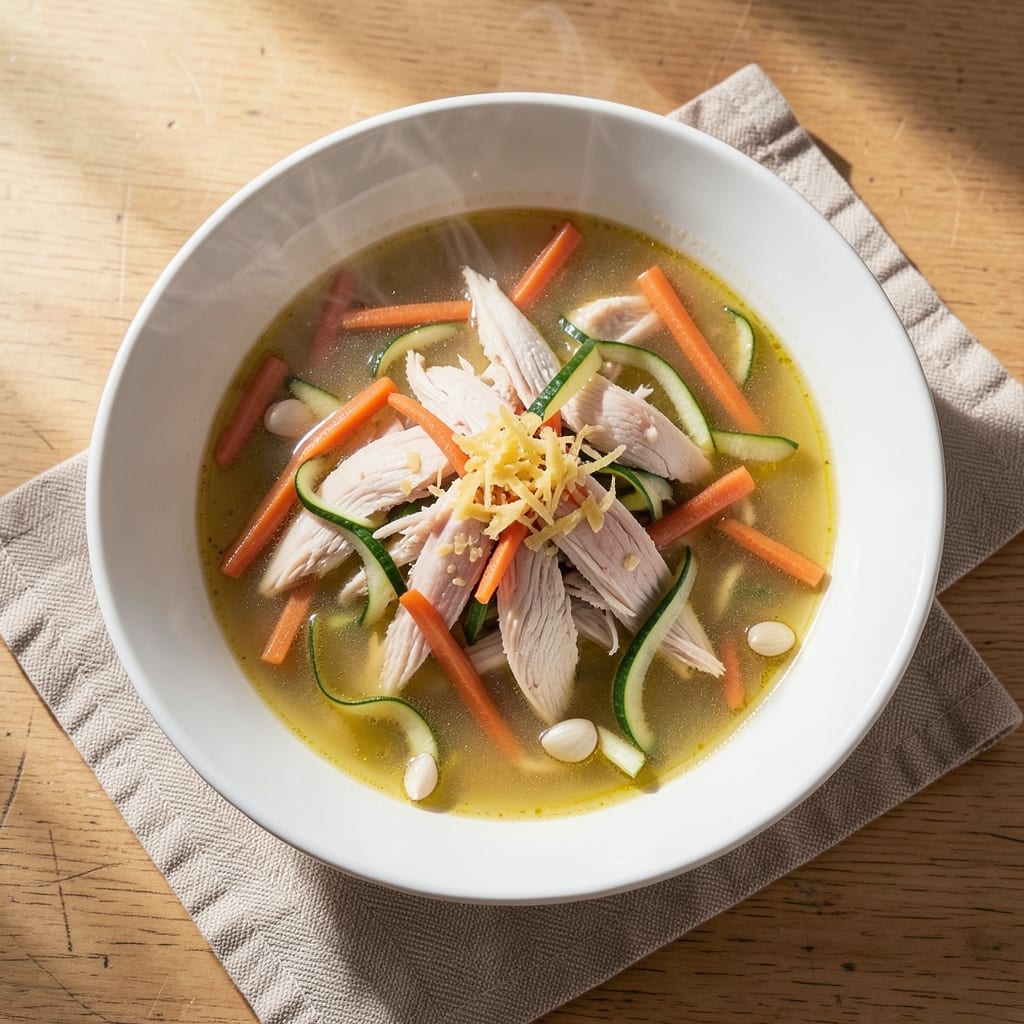
This bariatric chicken soup recipe delivers gentle digestion with every spoonful while packing in lean protein and easy-to-digest nutrients. Designed specifically for post-surgery needs, it focuses on soft textures, minimal fats, and balanced nutrition without compromising flavor. The secret lies in blending vegetables for smooth digestion while keeping the broth rich enough to feel satisfying yet gentle enough for sensitive stomachs.
The recipe begins with lean chicken breast—cooked to tender perfection in low-sodium broth—to provide essential protein without added fats. Vegetables like carrots and zucchini are finely blended to create a velvety texture that’s easy on digestion, while a touch of ginger adds natural anti-inflammatory benefits. Every ingredient is chosen for its nutritional value and digestibility, ensuring this soup supports recovery while nourishing the body.
What makes this recipe truly special is its adaptability—portions can be easily adjusted for individual needs, and the broth can be strained for a smoother consistency if required. The cooking process is straightforward, with controlled temperatures and times to preserve nutrients while ensuring the soup remains tender and flavorful. By the time you finish, you’ll have a nourishing, protein-rich meal that feels like comfort food without the heaviness.
Perfect for post-bariatric surgery meals, this soup can be prepped ahead and reheated gently to maintain its soft texture. Serve it warm with a sprinkle of fresh herbs for added flavor without compromising its gentle nature. Here’s how to make it—simple, nutritious, and designed to support your journey.
Ingredients for bariatric chicken soup
Lean protein, gentle vegetables, and nourishing broth create this bariatric-friendly soup.
| Ingredient | Amount | Notes |
|---|---|---|
| Lean Chicken Breast 🍗 | 12 oz | Boneless, skinless, cut into small pieces |
| Low-Sodium Chicken Broth 💧 | 4 cups | Homemade or high-quality store-bought |
| Carrots 🥕 | 1 medium | Peeled, cut into small chunks |
| Zucchini | 1 medium | Peeled, cut into small chunks |
| Fresh Ginger 🌿 | 1 tbsp | Grated, for anti-inflammatory benefits |
| Garlic Cloves 🧄 | 2 cloves | Minced, for depth of flavor |
| Extra-Virgin Olive Oil 🫒 | 1 tbsp | For gentle sautéing |
| Fresh Parsley 🌿 | ¼ cup | Chopped, for garnish and freshness |
| Low-Fat Greek Yogurt 🥛 | ¼ cup | For creaminess without heaviness |
| Diamond Crystal Kosher Salt 🧂 | ¼ tsp | For seasoning, use sparingly |
| Freshly Ground Black Pepper 🌶️ | ⅛ tsp | For subtle seasoning |
| Low-Fat Cream Cheese 🧀 | 1 oz | For velvety texture (optional) |
| Water 💧 | 1 cup | For blending vegetables smoothly |
The lean chicken breast is essential for post-surgery recovery, providing high-quality protein without excess fat. Opt for skinless, boneless cuts from a trusted butcher or grocery store's fresh section—Whole Foods or Trader Joe's carry excellent options. If pre-cut packages are available, check for minimal sodium content. For the broth, homemade is ideal, but Imagine or Pacific Foods low-sodium broth are reliable store-bought alternatives. The carrots and zucchini should be firm and vibrant, indicating freshness and easy digestibility. Avoid overripe or soft vegetables, which can be harder to process. Ginger and garlic from the produce section add flavor without compromising nutritional value—look for organic options if possible, as they often contain fewer pesticides.
No fresh ginger? Substitute with 1/2 teaspoon ground ginger, though fresh provides superior anti-inflammatory benefits. If zucchini is unavailable, cauliflower or sweet potato work well—simply adjust cooking time slightly. For added creaminess without dairy, silken tofu blended into the broth offers a protein-rich alternative. The low-fat Greek yogurt can be swapped for coconut milk if dairy sensitivity is a concern. When blending vegetables, start with less water and add gradually to achieve the desired smooth texture. Straining the broth through a fine-mesh sieve ensures an ultra-smooth consistency, ideal for sensitive stomachs.
This soup reheats beautifully—simply warm on the stove over low heat with a splash of water to maintain moisture. Store leftovers in airtight containers for up to 4 days in the refrigerator or 3 months in the freezer. For portion control, pre-portion into single servings before freezing. The broth can be made ahead and frozen separately, then combined with fresh ingredients when ready to serve. Fresh herbs like parsley should be added just before serving to preserve their vibrant flavor. This recipe is designed for gentle digestion, so avoid adding heavy cream or excessive fats—trust the natural richness of the ingredients.
Why You'll Love This Recipe
- No-Fuss Prep: I swear by this recipe—just dice the chicken, slice the veggies, and toss them in. No fancy techniques, no stress. The zucchini and carrots soften perfectly while the chicken stays tender, and honestly? That’s all the effort I’m willing to put in on a busy night.
- Ginger Zing: Between us, fresh ginger is the secret weapon here. It cuts through the broth’s simplicity with a warm, peppery kick that makes this soup ridiculously good. Pair that with the lean chicken’s clean protein and those sweet carrots, and you’ve got a flavor combo that feels indulgent but isn’t.
- Meal Prep MVP: This soup doubles as my lunch for days. I make a big batch on Sundays, and it’s still delicious three days later—no sad, soggy veggies here. The broth stays rich, the chicken stays juicy, and the zucchini holds its shape. Perfect for bariatric diets and my lazy mornings.
- Budget-Friendly Fix: Lean chicken breast and seasonal veggies won’t break the bank, and low-sodium broth means I’m not drowning it in salt. Plus, the leftovers stretch into salads, stir-fries, or even a quick pasta sauce. It’s the kind of recipe that makes me feel like I’m eating well without overspending.
Step-by-step instructions for bariatric chicken soup
Follow this gentle cooking method for a protein-rich, easy-to-digest soup designed for sensitive stomachs.
Sauté Aromatics for Gentle Flavor Foundation
Heat the 1 tablespoon extra-virgin olive oil in a medium pot over medium-low heat. Add the 1 tablespoon grated fresh ginger and 2 minced garlic cloves, stirring constantly for 30 seconds until fragrant but not browned. This gentle cooking preserves their digestive benefits while building flavor.
Watch the heat carefully—ginger and garlic burn quickly at higher temperatures. You'll know it's ready when the aroma fills your kitchen but the mixture remains light golden, not dark. Add the 1 medium peeled and chopped carrot and 1 medium peeled and chopped zucchini, stirring to coat with the oil. Cook for 5 minutes until the vegetables soften slightly but retain their shape.
Simmer Chicken and Vegetables for Tender Protein
Add the 12 oz lean chicken breast pieces to the pot, stirring to ensure they're coated with the aromatic oil. Pour in the 4 cups low-sodium chicken broth and bring to a gentle simmer over medium heat. Once simmering, reduce heat to low to maintain a steady, quiet bubbling—this prevents toughening the delicate chicken.
Cover and simmer for 12-15 minutes until the chicken is fork-tender and easily separates into flakes. The broth should reduce slightly but remain generous enough to coat the back of a spoon. If the broth reduces too quickly, add ¼ cup water to maintain proper consistency for easy digestion.
Create Velvety Texture with Yogurt and Cream Cheese
Remove the pot from heat and let the contents cool for 5 minutes. This cooling step prevents the yogurt from curdling when added. Stir in the ¼ cup low-fat Greek yogurt and 1 oz low-fat cream cheese until completely dissolved and smooth. The soup should develop a luxuriously creamy texture without heaviness.
Return the pot to low heat and stir gently for 2-3 minutes until the mixture reaches 160°F—just warm enough to blend flavors without cooking the dairy further. Season with the ¼ teaspoon kosher salt and ⅛ teaspoon black pepper, adjusting to taste if needed. The yogurt and cream cheese add protein and healthy fats while making the soup gentle on digestion.
Finish with Fresh Herbs and Proper Resting
Stir in the ¼ cup chopped fresh parsley and remove from heat. Let the soup rest for 10 minutes before serving—this allows flavors to meld and the broth to fully absorb the chicken's juices. The parsley adds freshness and a pop of color while providing additional nutrients without overpowering the delicate flavors.
Serve warm in small portions, as this gentle soup is designed to be easy to digest while providing substantial protein. The combination of tender chicken, soft vegetables, and creamy dairy creates a nourishing meal that's gentle on the digestive system while delivering essential nutrients.
Pro Tips For Making Bariatric Chicken Soup
- SEAR CHICKEN FIRST: Lean chicken breast can turn rubbery if boiled straight from the fridge, and no one wants that in soup. Hit it with a quick sear in a hot pan for 2-3 minutes per side before adding broth—just enough to brown, not cook through. The crust locks in flavor and prevents it from turning to mush later.
- JULIENNE CARROTS: Skip the thick slices—this isn’t a stew. Thin, even strips (about 1/8-inch wide) cook faster and stay tender without turning to mush. Use a mandoline if you’re impatient, but if you’re slicing by hand, angle the knife and take your time. Overcooked carrots scream "rushed," and we’re better than that.
- GINGER GRATE, DON’T SLICE: Fresh ginger loses its punch when chopped into chunks. Fine-grate it (about 1 teaspoon per batch) and let it bloom in the broth for 2 minutes before adding anything else. Sounds weird, but it works—your soup will taste like it actually has ginger, not just "something spicy."
- STRAIN THE BROTH: Low-sodium broth often tastes flat because it’s missing fat and collagen. After simmering, strain it through a fine-mesh sieve and press the solids with a spoon to extract every last bit of flavor. Return it to the pot, then add your chicken and veggies. Your soup will taste richer without extra sodium.
Regional styles of these flavors
Southern Comfort Style
Inspired by classic Southern cooking, this version swaps zucchini for sweet potatoes (peeled and cubed) and adds ½ cup diced celery for extra fiber. Cook the sweet potatoes for 10 minutes before adding the chicken to ensure they soften completely. Finish with a pinch of smoked paprika—just ¼ teaspoon—for a subtle smoky depth that feels familiar yet gentle on digestion. 🌶️
Mediterranean-Inspired Twist
For a Mediterranean flair, replace the carrots with ½ cup diced fennel and add ½ teaspoon dried oregano when sautéing the aromatics. Fennel adds a mild licorice note that pairs beautifully with the ginger, while oregano enhances the broth’s herbal profile. Use lemon zest instead of parsley for garnish—just ½ teaspoon—to brighten the soup without overpowering its gentle nature.
Japanese-Influenced Miso Version
Swap the low-sodium chicken broth for 4 cups kombu dashi (made with 1 piece kombu seaweed simmered in water for 20 minutes), and replace the Greek yogurt with ¼ cup white miso paste (dissolved in 2 tablespoons warm water). Add ½ teaspoon grated daikon for a subtle sweetness. Simmer the chicken and vegetables in the dashi for 10 minutes, then stir in the miso mixture off the heat. Garnish with thinly sliced scallions for a fresh finish.
Creamy Cauliflower Adaptation
For a lower-carb option, replace both carrots and zucchini with 2 cups cauliflower florets (steamed for 5 minutes before blending). Use ½ cup unsweetened almond milk instead of water when blending for a naturally creamy texture. Add ¼ teaspoon turmeric to the sautéed aromatics for an earthy note that complements the cauliflower’s mild flavor. This version is perfect for those needing even more digestive ease.
Herb-Forward European Style
Inspired by French and German soups, this variation includes ½ cup chopped leeks (white parts only) sautéed with the garlic and ginger. Add 1 bay leaf to the simmering broth and ½ teaspoon dried thyme when blending the vegetables. Finish with 1 tablespoon chopped tarragon** for a refined herbal note. The leeks add natural sweetness, while the thyme and tarragon create a sophisticated yet gentle flavor profile.
Nutrition facts
Frequently asked questions
Can I use ground chicken instead of breast for this recipe?
While ground chicken is lean, it's not ideal for this bariatric recipe. Ground chicken contains more connective tissue that can be harder to digest post-surgery. Stick with skinless, boneless breast pieces for the most tender, protein-rich result that won't strain your digestive system. If you prefer ground options, try finely chopped breast meat instead.
How do I adjust portion sizes for bariatric needs?
Start with ½ cup portions per serving to align with typical bariatric guidelines. For extra protein without volume, blend ¼ cup cooked chicken directly into each serving. Use a small ladle or measuring cup to ensure consistent portion sizes. Remember, this soup is designed to be nutrient-dense but gentle on digestion, so smaller portions will feel more satisfying.
Can I make this soup in a slow cooker?
Yes, but with adjustments! Sauté the aromatics and vegetables first, then transfer everything to your slow cooker with 4 cups broth. Cook on low for 4-5 hours or high for 2-3 hours until chicken is tender. The longer cooking time makes the chicken extra tender, but be cautious with the yogurt and cream cheese—add them only after removing from heat to prevent curdling.
What if I don't have a blender for smooth vegetables?
No blender? No problem! Simply mash the cooked vegetables with a potato masher until smooth, then strain through a fine-mesh sieve. For extra creaminess, stir in 2 tablespoons unsweetened applesauce per serving. The key is achieving a smooth texture that's gentle on digestion—this method works just as well for bariatric needs.
How can I increase the protein without adding fat?
For extra protein without added fat, stir in 1 tablespoon unflavored whey protein powder per serving after cooking. Or add ¼ cup cooked quinoa (pre-cooked and cooled) to each portion. Both options boost protein content while maintaining the soup's gentle, easy-to-digest nature. The whey protein dissolves completely when stirred into warm soup.