
Soups & Stews
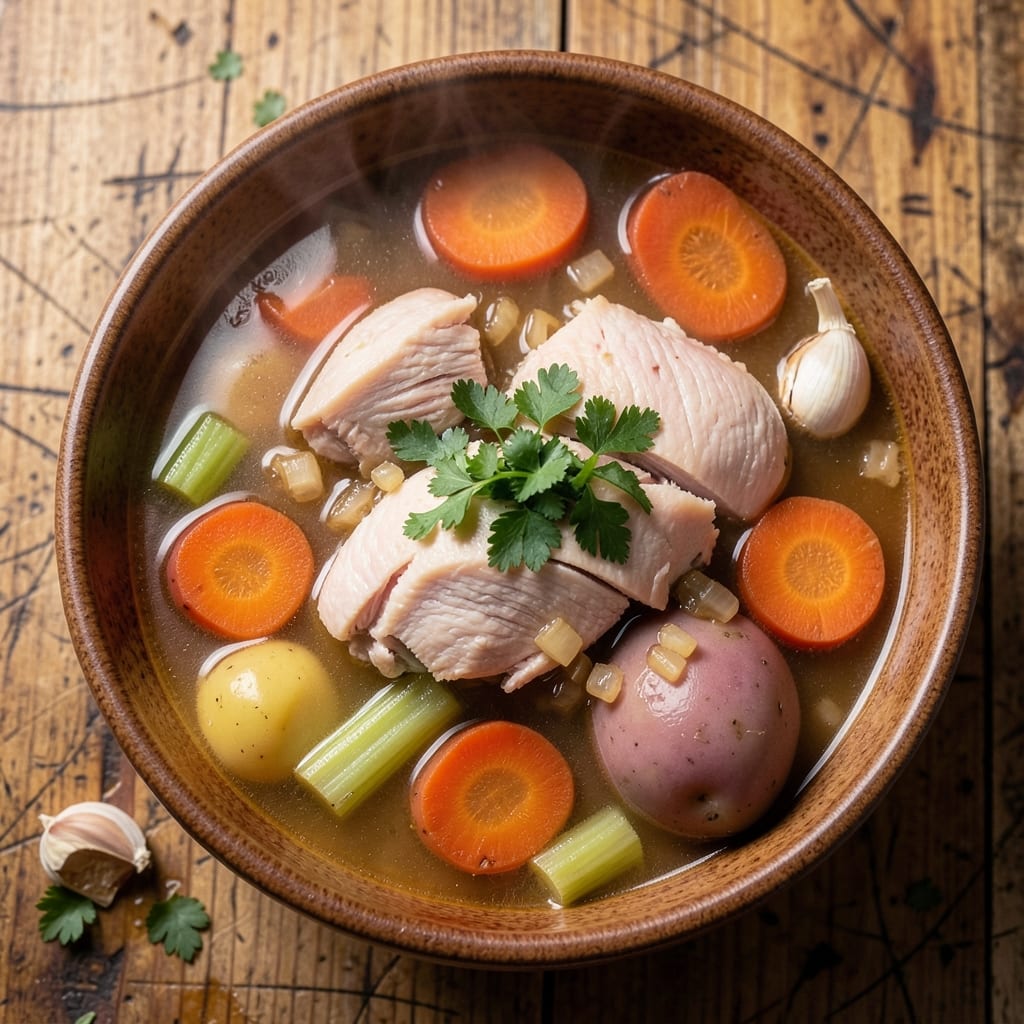
This basic chicken stock soup recipe transforms simple ingredients into a deeply satisfying bowl of comfort. The foundation—a rich, aromatic chicken stock—carries layers of umami flavor that elevate humble vegetables into something extraordinary. What begins as a humble pot of simmering broth becomes a velvety, flavor-packed soup where every spoonful delivers warmth and depth.
The beauty of this recipe lies in its simplicity: just a handful of fresh vegetables, a few aromatics, and quality chicken stock work together to create a harmonious balance. You'll build flavor gradually through gentle simmering, allowing the natural sweetness of carrots and onions to meld with the earthiness of celery and the savory richness of the stock. The result is a soup that's both nourishing and deeply comforting, perfect for chilly days or when you need a quick, wholesome meal.
What sets this soup apart is how the chicken stock serves as the star—its depth of flavor infuses every ingredient, creating a broth that's far more complex than store-bought versions. The vegetables soften just enough to release their sweetness while maintaining texture, and the optional shredded chicken adds protein and heartiness. This is the kind of soup that tastes even better the next day as flavors continue to develop.
Ready in under an hour, this recipe delivers restaurant-quality results with minimal effort. The key is patience—letting the soup simmer slowly allows all the flavors to meld and intensify. Whether you're feeding a family or treating yourself to a solo bowl, this soup is the ultimate expression of home cooking done right.
Ingredients for basic chicken stock soup
Quality chicken stock and fresh vegetables create a deeply comforting soup with restaurant-style depth.
| Ingredient | Amount | Notes |
|---|---|---|
| Chicken Stock 🍗 | 4 cups | Homemade or quality store-bought |
| Yellow Onion 🧅 | 1 whole | Medium size, diced |
| Carrots 🥕 | 2 medium | Peeled and sliced into rounds |
| Celery Stalks 🧄 | 2 whole | Trimmed and chopped |
| Garlic Cloves 🧄 | 3 cloves | Peeled and minced |
| Potatoes 🥔 | 1 ½ lb | Yukon gold, peeled and cubed |
| Fresh Parsley 🌿 | ¼ cup | Chopped, for garnish |
| Olive Oil 🫒 | 1 tbsp | Extra-virgin for richness |
| Salt 🧂 | 1 tsp | Kosher or sea salt |
| Black Pepper 🌶️ | ½ tsp | Freshly ground preferred |
| Chicken Breast 🍗 | 1 lb | Optional, shredded for protein |
| Bay Leaves 🌿 | 2 whole | For depth of flavor |
| Fresh Thyme 🌿 | 1 tbsp | Chopped, or 1 tsp dried |
The chicken stock is non-negotiable here—homemade is ideal, but Pacific Foods or Swanson brands deliver solid results. Look for labels that say 'no added salt' if you're controlling sodium. Fresh vegetables make all the difference: carrots and celery should be crisp, not rubbery, and onions should smell sharp, not fermented. For the potatoes, Yukon golds give that creamy texture without turning gluey. If you're using store-bought stock, check the sodium content—some brands pack a full day's worth in a single cup.
No fresh thyme? Dried works at one-third the amount, but the flavor won't be as bright. Running short on parsley? Fresh cilantro or basil can garnish, though parsley's mild flavor is safest. The chicken breast is optional but adds protein—rotisserie chicken works too if you're short on time. For a vegetarian version, swap the chicken for extra chickpeas or white beans. The bay leaves add subtle earthiness—don't skip them, but remove them before serving. If you're using pre-diced vegetables from the store, rinse them well to remove any excess sodium from the packaging.
This soup tastes even better the next day as flavors meld. Store leftovers in an airtight container for up to 4-5 days in the fridge. For freezing, portion into containers with a little headspace—3 months is ideal. I like to make a double batch and freeze half immediately. When reheating, add a splash of water or stock if it seems too thick. The vegetables will soften further, but that's what makes it so comforting. Garnish with fresh herbs right before serving to keep them vibrant.
Why You'll Love This Recipe
- Pantry Magic: I swear by this one—no fancy shopping required. Just stock, veggies, and garlic. That’s it. The onion, carrots, and celery mellow into a sweet, savory base while the garlic adds that je ne sais quoi without overpowering.
- Savory Simplicity: The stock carries the day here, rich and warm, while the veggies melt into tender threads. Honestly, the first sip feels like a hug. It’s the kind of soup that makes you pause mid-bite, wondering why you don’t eat it more often.
- Adaptable Any Day: Need a lunch for work? Toss in rice. Hosting a dinner party? Add a splash of cream and herbs. Even my picky teenager asks for seconds when I serve it with crusty bread. It’s the blank canvas of soups—easy to jazz up or keep classic.
- Budget-Friendly Staple: Between us, this is my wallet’s favorite recipe. A few dollars for stock and veggies stretches into four meals. Freeze leftovers for sick days or lazy nights—no waste, all flavor. That’s real cooking efficiency.
Step-by-step instructions for savory umami chicken stock soup
This one-pot method builds rich flavor layer by layer—simple ingredients, professional technique.
Sauté the Aromatic Vegetable Base
Heat the 1 tablespoon olive oil in a large pot over medium heat. Add the 1 whole yellow onion, 2 medium carrots, and 2 whole celery stalks, stirring occasionally for 5-6 minutes until the vegetables soften and the onion becomes translucent. This foundational step develops the soup's depth of flavor—don't rush it.
Add the 3 cloves minced garlic and 1 tablespoon fresh thyme, cooking for another 30 seconds until fragrant. The garlic should smell pungent but not brown—this prevents bitterness. Stir in the 2 whole bay leaves and 1 teaspoon salt, letting everything toast together for 1 minute. This aromatic blend forms the flavor backbone of your soup.
Build the Potato Foundation
Add the 1.5 pounds Yukon gold potatoes (peeled and cubed) to the pot, stirring to coat them in the aromatic oil. Pour in the 4 cups chicken stock and bring to a gentle boil over medium-high heat. Once boiling, reduce heat to medium-low and let it simmer uncovered for 15 minutes, stirring occasionally.
You'll notice the potatoes begin to soften and the liquid reduces slightly—this concentrates the flavors. The soup should smell like a cozy kitchen with warm vegetables and savory stock. If the liquid reduces too quickly, add ¼ cup water to maintain the proper consistency for cooking the chicken.
Cook the Chicken to Tender Perfection
Add the 1 pound chicken breast (cut into bite-sized pieces) to the simmering soup. Return to a gentle boil over medium heat, then immediately reduce to medium-low again. Simmer uncovered for 12-15 minutes, stirring occasionally, until the chicken is fork-tender and no longer pink in the center.
Here's the key: the chicken should pull apart easily with a fork, but not fall apart completely. If it's not quite there after 15 minutes, cover the pot and let it cook for another 5 minutes. Overcooking will make the chicken dry—we want it to stay juicy and absorb the soup's rich flavors.
Season and Finish with Fresh Herbs
Remove the pot from heat and discard the 2 whole bay leaves. Stir in the ½ teaspoon black pepper and taste the broth. Season with additional salt if needed—this is where you adjust the soup to your preference. The soup should be well-seasoned but not overly salty.
Turn off the heat and let the soup sit for 5 minutes to allow the flavors to meld. Then stir in the ¼ cup chopped fresh parsley, which adds a bright, fresh contrast to the rich soup. The parsley should be distributed evenly throughout—this final garnish elevates the presentation and adds a subtle herbal note that balances the dish.
Serve Warm with Crusty Bread
Ladle the soup into bowls and serve immediately while hot. The perfect bowl of soup should have tender chicken, creamy potatoes, and a rich, aromatic broth that coats the back of your throat. Each spoonful should deliver a balance of savory, slightly sweet potato, and umami depth from the chicken stock.
For the ultimate experience, serve with crusty bread to soak up every last drop of that flavorful broth. The bread adds texture contrast and makes this simple soup feel like a complete meal. Leftovers keep well in the refrigerator for 3-4 days, and the flavors actually improve as the broth continues to develop.
Pro Tips For Making Basic Chicken Stock Soup
- Sweat the Aromatics First: Don’t just toss chopped onion, celery, and carrots into the pot raw—sauté them in a dry pan for 5-7 minutes until softened and golden. This builds flavor depth that raw veggies just can’t match, and it prevents the stock from turning bitter when you add the garlic later.
- Cut Celery in Half Lengthwise: I used to chop celery into tiny pieces, but splitting the stalks down the middle releases more flavor without turning the soup into a mushy mess. The fibrous core stays intact, giving texture while the edges soften perfectly in the stock.
- Skip the Garlic Mash: Smash whole garlic cloves with the flat side of your knife before adding them—no need to mince. They’ll infuse the soup evenly without burning, and you’ll avoid the bitter aftertaste that comes from overcooking minced garlic.
- Simmer, Don’t Boil: Once everything’s in the pot, keep the heat low enough that only tiny bubbles break the surface. A rolling boil burns the veggies and makes the stock taste harsh. If you’re impatient, cover the pot and let it cook gently—it’ll still flavor the stock in half the time.
Essential equipment for basic chicken stock soup
Large Pot Essentials
A 6-8 quart heavy-bottomed pot is non-negotiable for even cooking and preventing scorching. I swear by All-Clad Stainless Steel or Le Creuset Dutch ovens—they distribute heat perfectly and handle the medium-low simmer required for this recipe. Avoid thin aluminum pots, which can cause hot spots and uneven cooking. 🌡️
Immersion Blender
For that silky texture without overcooking, an immersion blender is a game-changer. I use the Cuisinart Smart Stick to blend in 10-15 second bursts—just enough to smooth the broth while keeping the potatoes and chicken intact. If you don’t have one, a regular blender works, but you’ll need to strain the soup back into the pot afterward.
Fine-Mesh Strainer
If you’re using store-bought stock with bits or adding pre-chopped vegetables, a fine-mesh strainer (like the OXO Good Grips) ensures your soup is smooth. I place it over a bowl to catch any stray bits before returning the broth to the pot. This step is especially useful if you’re making a double batch for freezing.
Wooden Spoon
A heat-resistant wooden spoon (I love Oxo’s 12-inch version) is perfect for stirring without scratching your pot. Wood distributes heat evenly and won’t react with acidic ingredients. Avoid metal spoons—they can scratch non-stick coatings and introduce unwanted flavors over time. 🍲
Kitchen Timer
Timing is everything in soup-making, so a reliable kitchen timer keeps you from overcooking. I set mine for 15 minutes when simmering potatoes and 12-15 minutes for the chicken. Pro tip: Place it where you can see it from the stove—distractions lead to burnt bottoms!
Measuring Cups & Spoons
Precision matters, especially with chicken stock and salt. Use stainless steel measuring cups (like Pyrex) for accuracy, and a fine-mesh salt spoon for even distribution. I keep my 1-teaspoon salt and ½-teaspoon black pepper measurements handy to avoid over-seasoning. A garlic press also speeds up prep for those 3 cloves of minced garlic. 🧂
Nutrition facts
Frequently asked questions
Can I make this soup without chicken?
For a vegetarian version, simply omit the chicken breast and add 1 can (15 oz) chickpeas or 1 cup cooked white beans for protein. The soup will still be hearty and flavorful. For extra richness, stir in 2 tablespoons olive oil or a splash of heavy cream at the end.
How do I make my homemade chicken stock?
Simmer 1 whole chicken (4-5 lbs), 1 onion, 2 carrots, 2 celery stalks, 3 garlic cloves, and 1 bay leaf in 8 cups water for 2-3 hours over low heat. Skim off any foam that rises to the top. Strain and store in the fridge for up to 4 days or freeze for 3 months.
Why does my soup taste bland? Most likely, you need more salt or umami depth. Taste your broth before adding vegetables—it should be well-seasoned. Add 1 teaspoon soy sauce or ½ teaspoon fish sauce for extra umami, or a pinch of MSG if you're open to it.
Can I use frozen vegetables instead of fresh?
Yes, but with one important adjustment: use ½ cup frozen vegetables (like mixed veggies or peas) instead of fresh, and add them 5 minutes before the soup is done cooking. Frozen veggies release more moisture, so you'll want to reduce the cooking time slightly to avoid a watery soup.
How can I make this soup creamier?
For a velvety texture, blend 1 cup of the soup with an immersion blender until smooth, then stir it back into the pot. Alternatively, stir in ¼ cup heavy cream or ½ cup coconut milk at the end. For a dairy-free option, mash ½ cup cooked potatoes directly into the soup.