
Main Courses
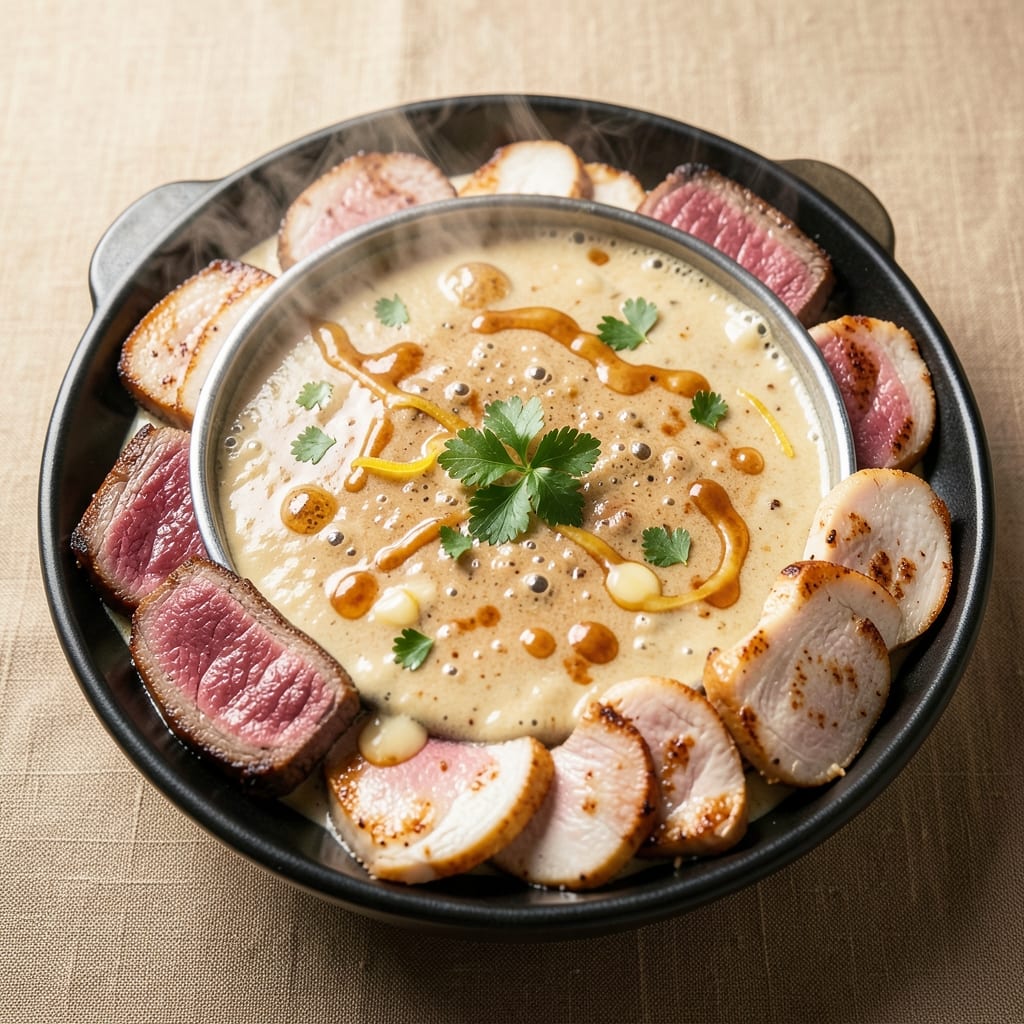
This beef and chicken fondue recipe transforms a simple gathering into an unforgettable experience with its creamy, melty cheese center and perfectly cooked proteins. The secret lies in balancing rich Gruyère with sharp cheddar for a sauce that's smooth yet complex, while the beef and chicken strips achieve that ideal tender-crisp texture that makes every dip irresistible. What starts as a warm, bubbling pot of cheese becomes the heart of your meal, inviting guests to savor bite after bite of golden, flavorful protein.
The foundation of this fondue is a foolproof cheese blend that stays creamy without breaking, thanks to precise measurements and a touch of white wine for depth. Meanwhile, the beef and chicken are marinated and cooked just enough to hold their shape while developing a subtle crust—critical for that satisfying contrast when dipped. A simple garlic-infused oil on the side adds another layer of flavor, ensuring every bite is packed with richness and aroma.
What you'll end up with is a restaurant-quality dish that feels effortless to prepare but impresses every time. The fondue pot becomes the centerpiece, surrounded by fresh vegetables and crusty bread for dipping, while the warm cheese sauce ties everything together. The key is keeping the cheese at the perfect temperature—hot enough to melt completely but cool enough to coat the proteins beautifully. This is comfort food at its finest, elevated by the interactive joy of sharing a pot.
Perfect for game day, holiday gatherings, or a cozy night in, this fondue brings people together around the table. The recipe scales easily for crowds, and leftovers reheat beautifully for a quick second serving. With just a few simple ingredients and a little attention to technique, you'll create a dish that feels luxurious without the fuss. Let's get started!
Ingredients for beef and chicken fondue
Sixteen ingredients transform a simple fondue into an unforgettable centerpiece of melty cheese and perfectly cooked proteins.
| Ingredient | Amount | Notes |
|---|---|---|
| Gruyère Cheese 🧀 | 1 ½ lb | Freshly grated, high-quality |
| Sharp White Cheddar Cheese 🧀 | 1 lb | Aged minimum 6 months |
| Dry White Wine 🍷 | 1 cup | Sauvignon Blanc or Chardonnay |
| Heavy Cream 🥛 | ½ cup | Full-fat for richness |
| Beef Tenderloin 🥩 | 1 ½ lb | Thinly sliced, 1/4-inch thick |
| Boneless Skinless Chicken Breast 🍗 | 1 ½ lb | Thinly sliced, 1/4-inch thick |
| Garlic Cloves 🧄 | 6 cloves | Minced for marinade |
| Extra-Virgin Olive Oil 🫒 | ¼ cup | For marinade and dipping oil |
| Dijon Mustard 🍯 | 1 tbsp | For marinade depth |
| Kosher Salt 🧂 | 2 tsp | Diamond Crystal preferred |
| Ground Black Pepper 🌶️ | 1 tsp | Freshly cracked |
| Crusty Bread 🍞 | 1 loaf | Baguette-style, sliced |
| Bell Peppers 🧅 | 2 whole | Assorted colors, sliced |
| Cherry Tomatoes 🍅 | 1 pint | Halved for dipping |
| White Wine Vinegar 💧 | 1 tbsp | For dipping oil |
The cheese selection is non-negotiable for that signature fondue texture. Gruyère from Cowgirl Creamery or Murray's Cheese melts beautifully, while aged sharp cheddar adds depth. Look for Gruyère with visible crystals—it's a good indicator of quality. The cheddar should be white and firm, not orange or crumbly. For the proteins, beef tenderloin is ideal—it stays tender when cooked to medium-rare. Chicken breast should be boneless, skinless, and pounded to even thickness for consistent cooking. Most grocery stores carry these, but specialty cheese shops offer superior quality.
No white wine on hand? Dry vermouth or chicken stock works in a pinch, though the flavor profile shifts slightly. The marinade can be adjusted with lemon juice if Dijon mustard isn't available, though it won't have the same tang. For the dipping oil, avocado oil holds up better to high heat than olive oil if you're frying proteins separately. The bread should be crusty but not rock-hard—baguettes from Whole Foods or Trader Joe's are perfect. Bell peppers can be swapped for asparagus or broccoli florets if you prefer, though they won't hold their shape as well when dipped.
Cheese mixture keeps best at room temperature for 2 hours before serving—any longer and it risks separating. Store unused cheese in an airtight container in the fridge for up to 2 weeks, though it's best used within 5 days. Marinated proteins should be refrigerated for up to 24 hours before cooking. For dipping oil, store in a sealed jar in the fridge for up to 1 week. The fondue pot itself can be reheated gently on the stove with a splash of wine to restore creaminess, though texture may slightly degrade after the first serving.
Why You'll Love This Recipe
- No-Fuss Fondue Night: I slice the beef tenderloin into cubes while the fondue melts—no fancy prep, just sear-and-dip. The wine and cream do all the heavy lifting, so I’m free to sip my glass while the magic happens.
- Cheese Love Bomb: Gruyère and sharp cheddar together? That’s the flavor combo I didn’t know I needed. The wine cuts through the richness, and the heavy cream makes it silky-smooth—like a hug in a bowl.
- Game for Any Gathering: This works for date night (romantic candlelight), game day (crowd-pleaser), or lazy Sundays (zero pressure). Just melt the cheese, add the wine, and let everyone skewer their own bites—no host stress.
- Leftovers? Even Better: The fondue sauce thickens beautifully the next day—perfect for dipping toast or tossing with pasta. And the beef cubes reheat like a dream, so I’m not stuck with a half-empty pot. Smart, simple, and satisfying.
Step-by-step instructions for beef and chicken fondue
Master this rich, velvety fondue with perfectly balanced proteins and melty cheese.
Prepare the Marinade and Protein
In a large bowl, combine the 0.25 cup extra-virgin olive oil, 1 tbsp Dijon mustard, 6 cloves minced garlic, 2 tsp kosher salt, and 1 tsp ground black pepper. Whisk until fully emulsified—this creates the foundation for your marinade. Add the 1.5 lb sliced beef tenderloin and 1.5 lb sliced boneless skinless chicken breast, ensuring each piece is fully coated. Cover and refrigerate for at least 2 hours (or overnight for deeper flavor penetration). The marinade should transform the proteins, tenderizing them while infusing them with aromatic depth.
For best results, use a glass or ceramic bowl for marinating—these materials don't absorb odors like plastic. I like to press the slices gently into the marinade to ensure even saturation. This step is critical for preventing dryness in the fondue proteins, as they'll be exposed to high heat later.
Melt the Cheese Base
In a heavy-bottomed fondue pot or deep saucepan, combine the 1.5 lb freshly grated Gruyère cheese and 1 lb aged sharp white cheddar cheese. Place the pot over medium-low heat and stir constantly with a wooden spoon or silicone spatula. The cheese should begin to melt within 3-5 minutes, forming a smooth, creamy texture. Once fully melted, remove from heat and stir in the 1 cup dry white wine and 0.5 cup heavy cream. This creates the foundational sauce that will bind everything together.
Here's the thing—don't rush this step. If the cheese starts to brown or separate, reduce the heat immediately. The ideal temperature for melting cheese is 160-170°F, where it becomes silky without breaking. The wine and cream should be incorporated gently to prevent curdling, which can happen if added too quickly to hot cheese.
Cook the Marinated Proteins
Heat a large skillet over medium-high heat with 1 tablespoon of the marinade (reserve the rest for basting). Working in batches, cook the marinated beef and chicken for 2-3 minutes per side until the beef reaches 145°F internally and the chicken hits 165°F. The proteins should develop a golden crust while remaining tender inside. Transfer the cooked pieces to a warm serving platter and tent loosely with foil to keep warm.
I press down gently on the fillets during the first minute of cooking—this prevents them from curling and ensures even contact with the pan. The marinade's acidity and fat content help create a beautiful crust that will contrast beautifully with the fondue's richness. Reserve any accumulated juices from the skillet; they'll be used later to enhance the fondue sauce.
Assemble the Fondue
Return the melted cheese mixture to low heat and whisk in the reserved marinade juices. The sauce should thicken slightly, reaching a luxurious consistency that clings beautifully to the bread and proteins. Taste and adjust seasoning with additional kosher salt or black pepper if needed. For extra depth, add 1 tbsp white wine vinegar to brighten the flavors and balance the richness.
This is the moment that matters: the fondue should be smooth, velvety, and able to coat a spoon without dripping. If it's too thick, whisk in 1-2 tablespoons of hot water to achieve the perfect dipping consistency. The cheese should be warm but not bubbling vigorously—just enough to maintain its creamy texture throughout the meal.
Prepare Dipping Accompaniments
Slice the 1 loaf crusty baguette into ½-inch thick pieces and arrange on a serving board. Slice the 2 whole bell peppers into ¼-inch strips and halve the 1 pint cherry tomatoes. Arrange these alongside the bread and proteins. The contrast of textures—crisp bread, tender proteins, and juicy vegetables—will elevate every bite.
For presentation, I like to create a warm dipping oil by combining 2 tablespoons of the reserved fondue sauce with 1 tablespoon extra-virgin olive oil and a pinch of black pepper. This extra oil adds another dimension to the meal, perfect for dipping bread or vegetables between fondue dips. Serve everything family-style so guests can create their own perfect combinations.
Pro Tips For Making Beef And Chicken Fondue
- SHRED THE CHEESE: DESCRIPTION:
- SWEAT THE WINE: DESCRIPTION:
- SEAR THE BEEF FIRST: DESCRIPTION:
- STIR LIKE YOUR LIFE DEPENDS ON IT: DESCRIPTION:
Serving suggestions for leftovers
Fondue Pot Essentials
Your fondue pot is the star of the show, so choose wisely! A cast-iron fondue pot with a heat diffuser (like the Le Creuset or Staub) maintains even heat and prevents scorching. For electric options, the Hamilton Beach Fondue Maker with adjustable temperature control works beautifully. Avoid thin aluminum pots—they heat unevenly and risk burning the cheese. I keep mine on low heat throughout the meal to maintain that perfect 160-170°F temperature. 🔥
Dipping Utensils
Long, slender tongs are a must for fondue—stainless steel fondue forks (like those from Williams Sonoma) are ideal for reaching deep into the pot without dropping food. I also recommend skewers for threading vegetables, especially bell peppers and cherry tomatoes. For the proteins, use slotted tongs to hold them steady while dipping. Pro tip: Keep a small bowl of hot water nearby to rinse utensils between uses—it prevents cheese buildup and keeps everything sanitary. ✨
Bread & Veggie Prep
Crusty bread is non-negotiable—baguettes or sourdough slices work best. Tear them into 1-inch pieces for easy dipping, but leave some whole slices for scooping. For vegetables, bell peppers and cherry tomatoes are classic, but broccoli florets or asparagus spears add great texture. I like to blanch veggies for 30 seconds in boiling water before serving to soften them slightly—this makes dipping even more satisfying. Arrange everything on a wooden board for rustic appeal. 🌱
Protein Plating
Serve the beef and chicken on a warm platter with a lightly oiled cloth underneath to catch drips. Arrange them in a single layer, not piled high, so guests can easily grab pieces without overcrowding. I like to fan the slices slightly so the edges crisp up a bit more—this adds visual appeal and extra texture. Keep the platter covered loosely with foil until serving to maintain warmth. For extra flair, sprinkle freshly cracked black pepper over the proteins right before serving. 💫
Fondue Sauce Refresh
As the cheese starts to thicken (after about 30-45 minutes), whisk in 1-2 tablespoons of hot water to restore its creamy consistency. For extra richness, stir in 1 tablespoon of reserved marinade juices or a splash of white wine. If the sauce separates, whisk vigorously or strain it through a fine-mesh sieve for a silky texture. I also keep a small bowl of extra cheese on the side—just grate in 1-2 tablespoons of Gruyère as needed to keep the fondue luscious. 🧀
Serving Style Tips
Set up your fondue station like a family-style feast: Place the fondue pot in the center, surrounded by the protein platter, bread basket, and veggie tray. Use small ramekins for individual dipping oils or sauces. For a cozy vibe, add candles or fairy lights around the pot—it makes the experience feel extra special. Encourage guests to dip bread first to coat their utensils, then move to proteins and veggies. This keeps the fondue from getting overloaded with large pieces. 💛
Nutrition facts
Frequently asked questions
Can I make this fondue ahead of time?
The cheese base should be prepared fresh, but you can prep components in advance. Marinate the beef and chicken for up to 24 hours ahead, and grate the cheese up to 2 hours before serving. Keep the cheese mixture at room temperature until ready to melt, and store the proteins in the fridge until cooking. The fondue pot itself reheats beautifully on low heat with a splash of wine to restore creaminess.
What if my cheese sauce separates?
This happens when cheese gets too hot or water is added too quickly. To fix it, whisk vigorously or strain through a fine-mesh sieve for a silky texture. For prevention, keep heat on medium-low and stir constantly. A splash of white wine or reserved marinade juices can also help rebind the sauce.
How do I keep the fondue at the right temperature?
Use a cast-iron fondue pot on low heat throughout serving. The ideal temperature is 160-170°F—hot enough to stay creamy but cool enough to coat properly. If it thickens too much, whisk in 1-2 tablespoons of hot water. Never let it boil, as this will cause separation.
Can I substitute other cheeses?
Gruyère and sharp cheddar work best for their melting properties, but you can swap 1/3 of the Gruyère for Emmental or Comté for extra nutty depth. Avoid pre-shredded cheese—it contains anti-caking agents that prevent proper melting. For a vegetarian option, replace beef with mushroom or halloumi slices.
How do I prevent the proteins from drying out?
Marinate for at least 2 hours (overnight is best) to tenderize, and cook in batches to avoid overcrowding. Keep proteins warm on a covered platter until serving, and dip only 2-3 pieces at a time to maintain moisture. The marinade's fat content helps preserve juiciness while dipping.