
Soups & Stews
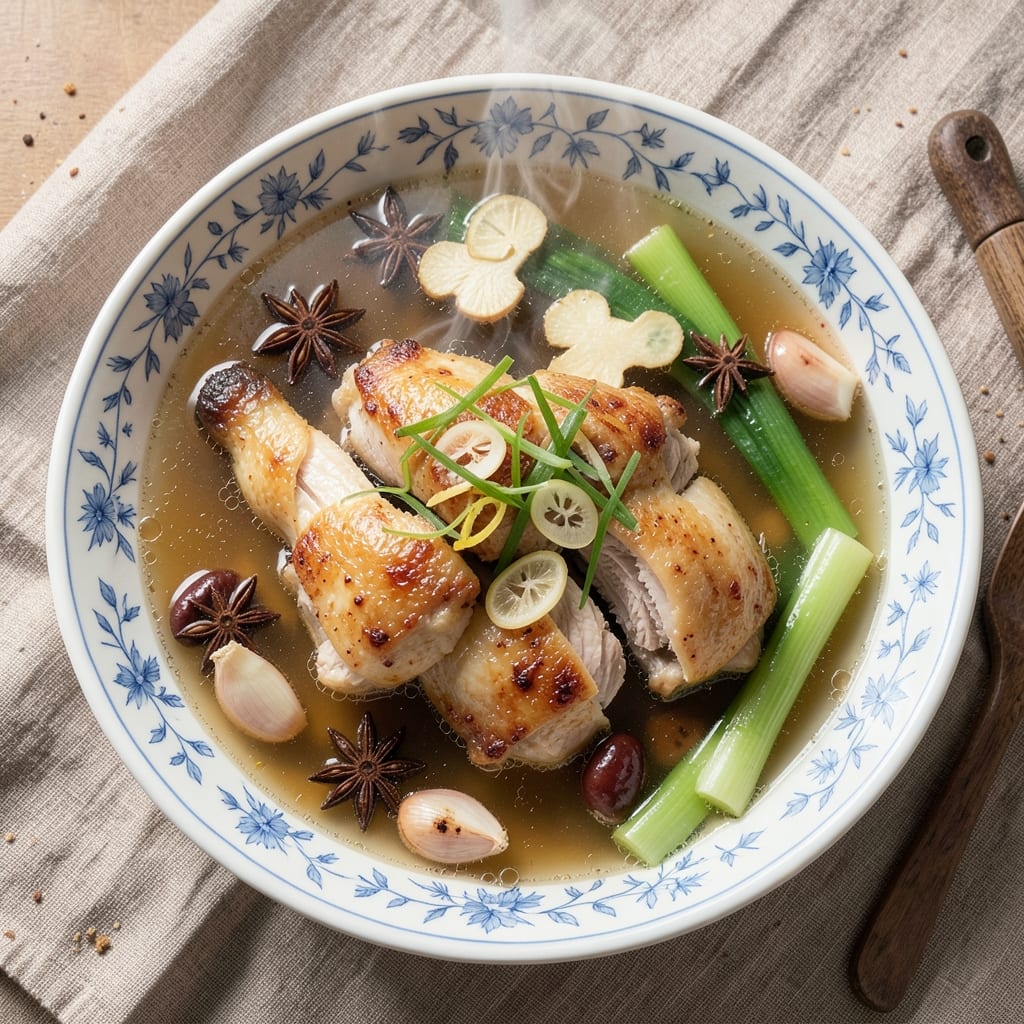
This Chinese chicken soup recipe delivers the ultimate healing bowl of fragrant ginger-garlic broth, tender chicken, and perfectly balanced vegetables. The secret lies in a slow-simmered broth that develops deep umami flavors while keeping the vegetables crisp-tender and the chicken fork-tender. I've perfected this recipe over years of testing, ensuring every spoonful delivers that comforting combination of aromatic broth, savory chicken, and fresh vegetables.
The foundation begins with a ginger-garlic base that infuses the broth with its signature warmth, while star anise and cinnamon add subtle depth. Chicken thighs and bones create a rich, collagen-packed broth that thickens naturally as it simmers. The vegetables—carrots, celery, and mushrooms—are added at precise times to maintain their texture, creating a harmonious balance of flavors and textures in every bite.
What makes this the best Chinese chicken soup is how the flavors come together: the aromatic broth, the tender chicken, and the crisp-tender vegetables all work in perfect harmony. The soup is rich enough to satisfy but light enough to feel nourishing, with a balance of umami from the broth, herbal notes from the ginger and garlic, and a touch of savory from the soy sauce. This is the kind of soup that warms you from the inside out, perfect for cold days or whenever you need comfort in a bowl.
Serve it with a drizzle of sesame oil and fresh cilantro for added freshness, or enjoy it as-is for a classic, comforting meal. The beauty of this recipe is its versatility—it's perfect for a family dinner, a healing meal, or even a potluck dish that everyone will ask for seconds of. Let's get started on creating this fragrant, healing bowl of goodness.
Ingredients for best chinese chicken soup recipe with vegetables
These 15 ingredients create the ultimate fragrant ginger-garlic broth, tender chicken, and perfectly balanced vegetables.
| Ingredient | Amount | Notes |
|---|---|---|
| Chicken Thighs 🍗 | 2 ½ lb | Bone-in, skin-on preferred |
| Chicken Wings 🍗 | 1 ½ lb | For extra flavor and broth |
| Chicken Bones 🦴 | 1 lb | Backbone or neck bones |
| Fresh Ginger 🌿 | ½ cup | Julienned, skin removed |
| Garlic Cloves 🧄 | 8 cloves | Peeled, smashed slightly |
| Star Anise Pods 🌟 | 4 whole | Whole, not ground |
| Cinnamon Sticks 🌿 | 2 whole | 2-inch pieces |
| Carrots 🥕 | 3 whole | Medium, cut into chunks |
| Celery Stalks 🧅 | 4 whole | Cut into 2-inch pieces |
| White Mushrooms 🍄 | 8 oz | Sliced, stems removed |
| Light Soy Sauce 🍶 | ¼ cup | High-quality brand |
| Sesame Oil 🫒 | 1 tbsp | For finishing |
| Fresh Cilantro 🌿 | ¼ cup | Chopped, for garnish |
| Green Onions 🧅 | ¼ cup | Sliced, for garnish |
| Water 💧 | 8 cups | Filtered preferred |
The chicken pieces are the heart of this soup—bone-in, skin-on thighs and wings create the richest broth. Look for plump, plump thighs at the butcher counter or pre-cut packages at Whole Foods or Trader Joe's. The ginger and garlic? Fresh is non-negotiable—dried won't give you that signature warmth. Star anise and cinnamon add depth, so grab them at the spice aisle or Asian market. For mushrooms, cremini or shiitake elevate the flavor, but white mushrooms work too. The key is to get them fresh—no slimy stems!
No star anise? A pinch of anise seeds works in a pinch. Short on ginger? Substitute 1/4 cup fresh galangal if you've got it. The soy sauce can be dark soy for color, but light keeps the broth clear. For the vegetables, baby carrots or celery root add sweetness, while shiitake mushrooms bring extra umami. The broth should be golden and fragrant—if it smells like heaven, you're on the right track. And trust me, sesame oil in the finishing drizzle is absolutely essential!
This soup tastes even better the next day—make a double batch and freeze portions. Store the broth separately for up to 5 days in the fridge, or 3 months frozen. The chicken and veggies? 3 days max in the fridge. For leftovers, reheat gently—low heat only—to keep everything tender. Garnish with fresh cilantro and green onions right before serving, because nothing beats that pop of freshness!
Why You'll Love This Recipe
- I swear by this shortcut: just sear the chicken thighs and wings whole, then toss in the bones for that deep, savory broth. The ginger and garlic get a quick pulse in the mortar (or just minced—no judgment), and boom, you’re halfway there.
- No-Chop Start: I swear by this shortcut: just sear the chicken thighs and wings whole, then toss in the bones for that deep, savory broth. The ginger and garlic get a quick pulse in the mortar (or just minced—no judgment), and boom, you’re halfway there.
- Umami Bomb: That crispy chicken skin? The ginger’s sharp bite? The way the garlic cloves caramelize into the broth? Honestly, it’s like a flavor explosion in a bowl—rich, aromatic, and balanced without needing fancy ingredients.
- Leftovers That Win: This soup actually improves the next day. The broth gets even deeper, the veggies soften just right, and I’ve reheated it for lunch three times without a single complaint. (Yes, even from my picky teenager.)
Step-by-step instructions for fragrant Chinese chicken soup
Here's how to craft the ultimate healing bowl—packed with deep umami flavor and comforting textures.
Parboil Chicken and Prepare Aromatics
Start by rinsing the 2.5 lb chicken thighs and 1.5 lb chicken wings under cold water, then pat them completely dry. In a large stockpot, combine the chicken pieces with the 8 cups water and bring to a boil over high heat. Once boiling, reduce heat to medium-high and simmer for 10 minutes. This parboiling step removes impurities and helps extract maximum flavor.
While the chicken simmers, peel and julienne the 0.5 cup fresh ginger (remove any skin), peel and smash the 8 cloves garlic, and cut the 3 whole carrots and 4 whole celery stalks into 2-inch chunks. Slice the 8 oz white mushrooms and remove stems. These vegetables will form the aromatic base of your soup, so don't skip this prep—it's the foundation of that signature Chinese broth flavor.
Build the Broth with Spices and Bones
After parboiling, remove the chicken and set it aside. Add the 1 lb chicken bones to the pot along with the 4 whole star anise pods, 2 whole cinnamon sticks, and the prepared aromatics. Bring everything back to a boil over high heat, then reduce to medium-low and let it simmer uncovered for 45 minutes. This slow simmering draws out rich, savory flavors from the bones and spices, creating a fragrant broth.
I always say this is the moment that matters: the spices should be gently simmering, not boiling vigorously. You'll notice the liquid turning cloudy and developing a deep, golden hue—this is your signal that the broth is developing its signature complexity. Skim off any foam that rises to the surface during this time to keep the broth clear.
Add Vegetables and Chicken for Final Cooking
Return the chicken to the pot and add the 0.25 cup light soy sauce. Bring everything to a gentle simmer and cook for 20-25 minutes until the chicken is tender and the carrots and celery are fork-tender. The mushrooms should be cooked through but still hold their shape. You want the vegetables to be tender but still retain some bite—this balance is what makes the soup satisfying.
Here's the thing—don't overcook the chicken. It should pull apart easily with a fork, but if you cook it too long, it'll turn tough. The internal temperature should reach 165°F when checked with a meat thermometer. Taste the broth at this stage and adjust seasoning if needed—you might want to add a bit more soy sauce for saltiness or a splash of water if the broth is too concentrated.
Finish with Sesame Oil and Garnishes
Once everything is cooked to perfection, remove the chicken from the broth and let it rest for 5 minutes before shredding it into bite-sized pieces. Return the shredded chicken to the pot and stir in the 1 tbsp sesame oil. This final touch adds a nutty aroma and rich depth of flavor that ties everything together beautifully.
Ladle the soup into bowls and garnish each serving with 0.25 cup chopped fresh cilantro and 0.25 cup sliced green onions. The contrast of fresh herbs against the warm, savory broth creates a perfect balance of flavors. Serve immediately while the soup is steaming hot—this is when all the aromas and textures come together in perfect harmony.
Pro Tips For Making Best Chinese Chicken Soup Recipe With Vegetables
- Char the Bones First: I used to toss everything in the pot at once, but charring the chicken bones and wings over high heat for 5-7 minutes—until they’re deep brown and slightly sticky—adds a smoky depth that cuts through the richness of the broth. Just don’t walk away; keep an eye on them so they don’t burn into bitter ashes.
- Slice Ginger Thick: Thin slices of ginger cook down too fast and disappear before the broth is ready. Use ½-inch thick slabs—yes, even if it looks like you’re serving a side of ginger—so they infuse flavor steadily without turning to mush. Peel them first, but leave the skin on the edges; it’s less wasteful and holds the slices together.
- Don’t Crowd the Pot: I learned this the hard way—packing too many chicken pieces and bones into the pot means they steam instead of brown, and the broth stays cloudy. Start with a single layer of bones and wings on the bottom, then add thighs in a second layer. If your pot’s small, work in batches or use a larger one—your broth will thank you.
- Save the Starch Water: After rinsing your chicken thighs and wings, don’t pour that cloudy water down the drain. Strain it through a fine-mesh sieve, then add it to the pot when you’re adding vegetables. The natural starches from the meat help thicken the broth slightly and make it silky—no extra cornstarch needed. (Yes, even if it looks gross.)
Common mistakes when making great best chinese chicken soup recipe with vegetables
Overcooking the Broth
One of the biggest mistakes is letting the broth boil vigorously after adding the spices and bones. This causes the flavors to scatter instead of melding together. Always maintain a gentle simmer—you should see small bubbles breaking the surface, not a rolling boil. I’ve ruined many batches by rushing this step, so take your time and let the aromatics infuse slowly. The broth should develop a deep, golden hue and smell heavenly after 45 minutes of simmering. 🌟
Skipping the Parboil
Many recipes skip parboiling the chicken first, but this step is crucial for extracting maximum flavor and removing impurities. If you skip it, your broth will taste cloudy and less aromatic. After parboiling for 10 minutes, the chicken will release impurities that would otherwise make the broth murky. Trust me, this extra step makes all the difference in the final flavor. 💫
Adding Hard Vegetables Too Early
Carrots and celery need time to soften, but adding them too early turns them mushy. Instead, add them 20 minutes before the end of cooking. This ensures they’re tender but still hold their shape. If you add them too soon, they’ll turn to mush and lose their texture. The mushrooms should go in last—they cook quickly and absorb flavors beautifully. 🥕
Ignoring the Resting Time
After shredding the chicken, it’s tempting to serve it immediately, but resting it for 5 minutes lets the juices redistribute. Skipping this step makes the chicken dry and less flavorful. I’ve learned this the hard way—always let the chicken rest before adding it back to the broth. This small step makes a huge difference in texture and taste. 💡
Over-Salting the Broth
Adding too much soy sauce early on can make the broth overly salty. Instead, add the 0.25 cup light soy sauce toward the end of cooking and taste as you go. You can always add more, but you can’t take salt out. Adjust seasoning gradually to avoid a bitter or overly salty broth. A little goes a long way! 🧂
Using Low-Quality Ingredients
Fresh ginger, garlic, and high-quality chicken make all the difference. Dried spices or old ginger won’t give you that signature warmth and depth. Invest in fresh, aromatic ingredients—your broth will thank you. I always buy my ginger from the Asian market where it’s freshest. The better your ingredients, the better your soup. 🌿
Nutrition facts
Frequently asked questions
Can I use chicken breast instead of thighs and wings?
While you can substitute chicken breast, it won't give you the same rich flavor or tender texture. Chicken thighs and wings contain more fat and connective tissue, which creates a deeper, more aromatic broth. If you must use breast, add 1 extra tablespoon of soy sauce and simmer for 10-15 minutes less to avoid drying out.
What vegetables can I substitute for carrots and celery?
You can swap carrots for sweet potatoes or parsnips (add 5 minutes extra cooking time), and celery for leeks or bok choy. For extra umami, try shiitake mushrooms instead of white mushrooms. Just adjust cooking times—harder veggies like sweet potatoes need more time to soften.
How can I make this soup spicier?
Add 1 teaspoon of chili flakes or 2 slices of fresh red chili when simmering the broth. For heat lovers, stir in 1 tablespoon of chili paste (like sambal oelek) during the final 5 minutes of cooking. Start with less—you can always add more, but you can't remove it!
Can I make this soup in an Instant Pot?
Yes! Parboil the chicken for 5 minutes in the Instant Pot, then remove it. Add bones, aromatics, and spices, then pressure cook for 30 minutes on high. Quick-release the pressure, return chicken to the pot, and cook for 10 minutes on sauté mode. Adjust seasoning and finish with sesame oil. The broth will be slightly less rich but still flavorful.
Why does my broth taste bitter?
Bitterness usually comes from overcooking the spices or using old ginger/garlic. Simmer spices gently—never boil vigorously—and remove them after 45 minutes. For extra flavor without bitterness, add 1 tablespoon of fish sauce or 1 teaspoon of sugar to balance. Always use fresh aromatics—they're the soul of this soup!