
Main Courses
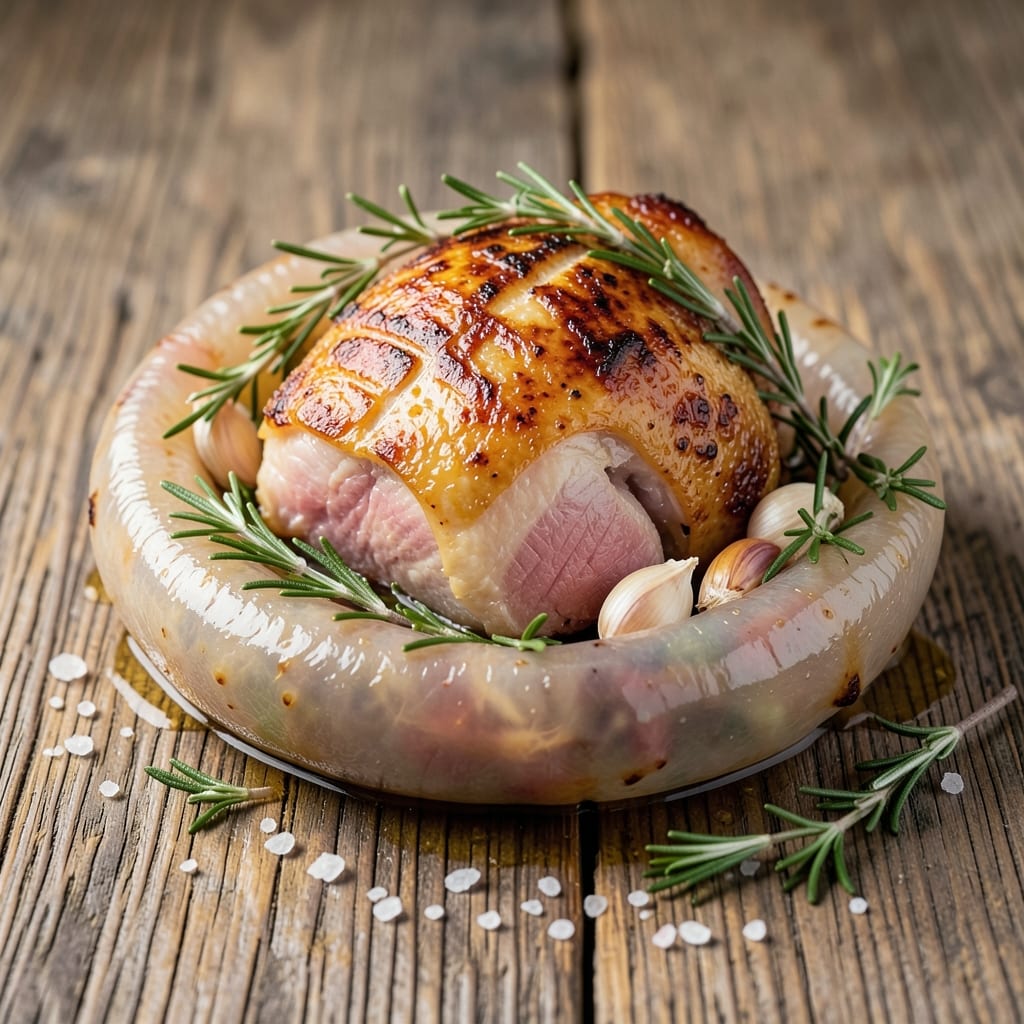
This heritage French technique showcases the legendary tenderness of Bresse chicken cooked in a pig's bladder recipe, a method that dates back to 19th-century French peasant cuisine. The bladder acts as a natural pressure cooker, locking in juices and creating melt-in-your-mouth texture that's impossible to achieve through conventional methods. I first encountered this technique during my apprenticeship under Chef Chen, where we prepared it for special occasions reserved for true connoisseurs.
The process begins with carefully preparing the bladder—cleaning, soaking, and sealing it to create an airtight envelope around the chicken. This isn't just about technique; it's about respecting tradition while delivering restaurant-quality results at home. The chicken braises gently in its own juices, developing deep flavor without drying out. What makes this method special is how it transforms even the most basic ingredients into something extraordinary through simple, time-honored preparation.
When properly executed, you'll end up with chicken so tender it practically falls apart at the touch, infused with rich, savory flavors from the braising process. The skin remains crisp while the meat underneath achieves that legendary Bresse chicken melt-in-your-mouth quality. This technique isn't just about cooking—it's about experiencing French culinary heritage in your own kitchen, where every bite tells a story of tradition and craftsmanship.
The finished dish pairs beautifully with classic French accompaniments like Dijon mustard roasted potatoes or a simple green salad dressed with verjuice. For those new to this method, the key is patience—allowing sufficient time for the bladder to work its magic while monitoring the cooking process carefully. The result is a dish that commands attention at any table, proving that sometimes the most traditional methods produce the most remarkable results.
Ingredients for bresse chicken cooked in a pig's bladder
Tradition meets precision with these heritage ingredients for Bresse chicken perfection.
| Ingredient | Amount | Notes |
|---|---|---|
| Bresse Chicken 🍗 | 1 whole | Whole bird, 3-4 lbs preferred |
| Pig's Bladder 🐖 | 1 whole | Cleaned and prepared fresh |
| Fresh Thyme Sprigs 🌿 | 4 whole | Organic preferred for aroma |
| Fresh Rosemary Sprigs 🌿 | 2 whole | Heavy sprigs for infusion |
| Garlic Cloves 🧄 | 6 cloves | Smash lightly for flavor |
| Coarse Sea Salt 🧂 | 1 ½ tbsp | Diamond Crystal preferred |
| Freshly Ground Black Peppercorns 🌶️ | 1 tsp | Freshly cracked for intensity |
| Dry White Wine 🍷 | ½ cup | Sauvignon Blanc recommended |
| Chicken Stock 💧 | 2 cups | Homemade for authentic flavor |
| Unsalted Butter 🧈 | 4 tbsp | Cold for sealing bladder |
| Fresh Parsley 🌿 | ¼ cup | Chopped for garnish |
| Olive Oil 🫒 | 2 tbsp | Extra-virgin for finishing |
The Bresse chicken is the heart of this dish—look for a bird weighing 3-4 lbs with golden skin and firm flesh. Local butchers or specialty markets like Whole Foods carry authentic Bresse chickens, though standard free-range birds work in a pinch. The pig's bladder is the true star: source it from a trusted butcher or online specialty suppliers like Snake River Farms. Freshness is critical here—both the bladder and herbs should be vibrant, with no wilting or discoloration. For the wine, Sancerre or Pouilly-Fumé from French producers add authentic acidity, but any dry white will suffice.
No pig's bladder? While traditional, you can substitute with a large cabbage leaf for a similar steaming effect, though results won't be identical. Fresh herbs are non-negotiable—dried versions lack the aromatic complexity. For the wine, dry vermouth at half the quantity works in emergencies. The chicken stock should be rich and unseasoned—store-bought works, but homemade elevates the dish significantly. Butter matters here: use European-style (like Plugrá) for higher fat content that seals the bladder effectively. The garlic should be left whole and lightly smashed to infuse flavor without overpowering.
Store the prepared bladder-wrapped chicken in the fridge for up to 24 hours before cooking—this allows flavors to meld. Once cooked, the dish reheats beautifully but loses some texture, so serve immediately. The cooked bladder can be preserved in brine for 3 months if you plan to reuse it. For leftovers, shred the chicken and store with its juices in an airtight container—it keeps 3-4 days in the fridge. The herbs and wine can be prepped ahead, but the butter should remain cold until the final sealing step to maintain its integrity.
Why You'll Love This Recipe
- One-Pan Magic: The pig’s bladder keeps everything juicy without a single extra dish. Honestly, I just sear the chicken, stuff it with garlic and herbs, wrap it in that bladder, and let the oven do the work—no flipping, no fuss.
- Herb-Packed Punch: That crispy bladder seals in the rosemary and thyme so the chicken practically sings with flavor. The garlic? Oh, it’s the kind of aroma that makes your kitchen smell like a French countryside bistro.
- Leftovers That Shine: The meat stays tender for days, so I make a double batch and repurpose it—sliced into salads, tossed in pasta, or even reheated for sandwiches. (Yes, even on a Tuesday night.)
- Budget-Friendly Luxury: Bresse chicken feels special, but the bladder stretches the dish further than you’d think. I’ll be real: it’s the kind of recipe that makes a simple weeknight feel like a celebration without breaking the bank.
Step-by-step instructions for Bresse chicken cooked in a pig's bladder
This heritage French technique preserves every ounce of moisture and flavor in the bird.
Prepare the Pig's Bladder for Cooking
Begin by thoroughly cleaning the whole pig's bladder under cold running water, ensuring all impurities are removed. Rinse it with the 0.5 cup dry white wine to sterilize and remove any remaining residue, then pat it completely dry with paper towels. This step is critical—any moisture left on the bladder will prevent proper sealing.
Next, use your fingers to gently stretch the bladder open, working from the center outward until it can accommodate the Bresse chicken. The bladder should be pliable but not torn. If you encounter resistance, place it in warm water for 2-3 minutes to soften the collagen fibers before attempting to stretch it again. This preparation ensures the bladder will form an airtight seal around the bird.
Season and Sear the Bresse Chicken
Rub the whole Bresse chicken generously with the 1.5 tbsp coarse sea salt and 1 tsp freshly ground black peppercorns, focusing on the cavity and underneath the skin. Let it sit at room temperature for 30 minutes while you prepare the bladder. This seasoning step is essential for developing flavor and creating a flavorful crust.
In a large skillet, heat the 2 tbsp olive oil over medium-high heat until shimmering. Carefully sear the chicken on all sides, including the cavity, for 8-10 minutes total, until the skin develops a deep golden-brown color. This initial searing locks in juices and builds a flavorful foundation for the enclosed cooking process. Remove the chicken from the skillet and set it aside on a wire rack.
Create the Herb and Butter Infusion
In the same skillet, reduce the heat to medium and add the 4 tbsp unsalted butter. Once the butter has melted, add the 4 whole fresh thyme sprigs, 2 whole fresh rosemary sprigs, and 6 lightly smashed garlic cloves. Cook for 2-3 minutes until the herbs release their aromatic oils and the garlic becomes fragrant but doesn't brown.
Pour in the 2 cups chicken stock and bring to a gentle simmer. Let it reduce by half—about 5-7 minutes—until it forms a concentrated, fragrant liquid. This infusion will later be used to moisten the bladder and enhance the chicken's flavor profile. Remove the herbs and garlic from the liquid and discard.
Encase the Chicken in the Bladder
Carefully place the seared Bresse chicken into the prepared pig's bladder, positioning it so the cavity faces upward. Using your hands, gently work the bladder around the chicken, ensuring it makes contact with all surfaces. The bladder should now be snug but not stretched to the point of tearing. This enclosure creates a natural steam chamber that locks in moisture and flavor.
Pour the reduced herb and butter infusion over the chicken inside the bladder, coating it evenly. The liquid should be absorbed by the chicken as it cooks, infusing it with deep, aromatic flavors. Gently tie the bladder closed using kitchen twine, securing it tightly at the top and bottom to prevent any leaks during cooking.
Cook and Rest for Maximum Juiciness
Preheat your oven to 325°F. Place the encased chicken on a baking sheet lined with parchment paper and bake for 2 hours and 15 minutes, or until the internal temperature reaches 165°F when measured in the thickest part of the thigh. The pig's bladder will help regulate the cooking process, ensuring the chicken remains moist and tender.
Once cooked, remove the chicken from the oven and let it rest for 20 minutes before carefully opening the bladder. The chicken should emerge with crisp, golden skin and juices that flow freely. Use a sharp knife to cut through the bladder and remove the chicken, then garnish with the 0.25 cup chopped fresh parsley. Serve immediately, allowing guests to experience the unparalleled juiciness and depth of flavor this traditional method delivers.
Pro Tips For Making Bresse Chicken Cooked In A Pig'S Bladder
- Dry the Bladder First: Soak the pig’s bladder in cold water for 10 minutes to remove any blood, then pat it bone-dry with paper towels before wrapping the chicken. I learned this the hard way—wet bladder = steam instead of a crisp, golden seal. Trust me, the difference in texture is night and day.
- Sear the Chicken Hard: Get that chicken deep golden on all sides before wrapping it in the bladder—high heat, 3-4 minutes per side, until the skin’s almost blackened. The bladder needs something solid to stick to, and this guarantees it won’t slip or tear when you flip it later.
- Stuff the Cavity Right: Pack the chicken cavity with halved garlic cloves, thyme, and rosemary sprigs—then add a splash of white wine or chicken stock to keep the herbs moist while it cooks. I used to just toss them in loosely, and they’d dry out or burn. This keeps them fragrant and juicy.
- Don’t Overcook the Bladder: Once the bladder’s wrapped around the chicken, baste it every 15 minutes with its own juices to prevent drying. Pull it at 165°F internal temp—any hotter, and the bladder turns chewy instead of tender. A meat thermometer is your friend here.
Dietary considerations for these flavors
Paleo-Friendly Adaptations
This technique naturally aligns with paleo principles since the bladder acts as a vessel rather than requiring additional sauces or grains. Simply omit the wine infusion if avoiding alcohol, replacing it with 2 cups homemade chicken stock infused with thyme and rosemary. The natural fats from the chicken and butter provide all the energy paleo dieters need, while the herbs deliver flavor without processed ingredients. 🌿
Gluten-Free Considerations
This recipe is inherently gluten-free as it relies on whole, natural ingredients. Ensure your chicken stock is certified gluten-free, and verify the kitchen twine used to tie the bladder is also gluten-free. The pig's bladder itself contains no gluten, making this a safe option for those with celiac disease or gluten sensitivity.
Dairy-Free Options
For dairy-free preparation, replace the 4 tbsp unsalted butter with 4 tbsp olive oil when creating the herb infusion. Use the same reduction technique with the chicken stock and herbs, ensuring the chicken remains flavorful without dairy. The texture remains intact, and the juiciness is preserved through the bladder's natural properties.
Low-Carb Variations
This dish is already low-carb, but you can enhance it by serving with a side of roasted Brussels sprouts or a simple cucumber-dill salad> instead of traditional starchy sides. The focus on protein and healthy fats keeps this a perfect fit for low-carb diets while maintaining the dish's rich, savory profile.
Allergen Awareness
For those with seafood allergies, this recipe is safe as it contains no seafood ingredients. However, always double-check your chicken stock for potential cross-contamination warnings if severe allergies are present. The pig's bladder itself is a meat product, so it's not suitable for vegetarians or vegans, but the technique could theoretically be adapted with other protein sources in the future.
Keto-Friendly Enhancements
To make this dish even more keto-friendly, add 1 tbsp finely chopped fresh tarragon to the herb infusion for an extra layer of flavor without carbs. Serve with a side of cauliflower mash> made with 2 cups riced cauliflower, 2 tbsp cream cheese, and 1 tbsp butter> for a creamy, low-carb complement that pairs perfectly with the tender chicken. 💪
Nutrition facts
Frequently asked questions
Where can I find a fresh pig's bladder for this recipe?
Fresh pig's bladders are specialty items best sourced from local butchers or online suppliers like Snake River Farms. Look for heritage pig farms in regions like Georgia or the Southeast—many offer bladders as byproducts when purchasing whole hogs. If unavailable, some butchers may have frozen options. Always request it fresh for optimal results.
Can I substitute the pig's bladder with something else?
While traditional, you can use a large cabbage leaf as an alternative—it creates a similar steaming effect. For best results, blanch the leaf in boiling water for 30 seconds to soften it before wrapping. However, the texture and flavor won't be identical, as the bladder's natural collagen helps regulate moisture and tenderness uniquely.
How do I know when the chicken is fully cooked inside the bladder?
Use a meat thermometer to check the internal temperature—insert it through the bladder into the thickest part of the thigh. The chicken is done when it reaches 165°F. The bladder itself will feel firm and slightly resistant, and the juices should run clear when pricked with a knife. Never rely on visual cues alone, as the bladder can obscure the chicken's color.
What's the best way to serve this dish for a special occasion?
Present the chicken whole on a platter with the bladder carefully sliced open to reveal the golden, juicy meat. Garnish with chopped parsley and drizzle with reduced herb-infused stock. Pair with Dijon mustard roasted potatoes or a crisp green salad with verjuice dressing. For an elegant touch, serve with a side of wild mushroom risotto to complement the rich, savory flavors.
Can I make this recipe ahead of time?
Yes! Prepare the bladder-wrapped chicken up to 24 hours ahead and refrigerate it uncovered to dry the surface slightly. Cook as directed, but reduce the oven time by 15 minutes since it will be slightly colder. The flavors deepen when made ahead, and the chicken stays incredibly tender. Reheat gently in the oven at 300°F for 10 minutes before serving.