
Main Courses
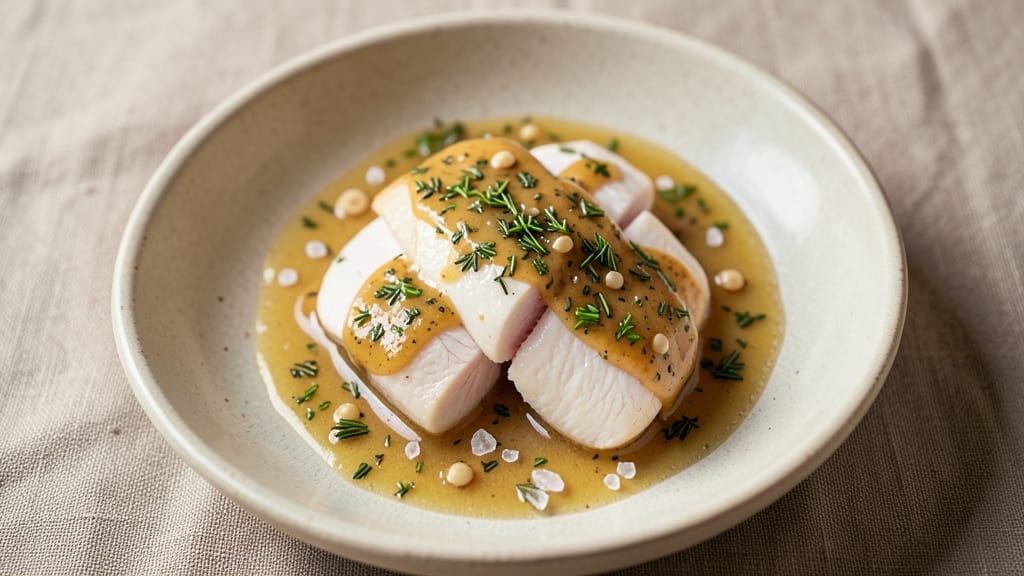
Mastering Gordon Ramsay's poached chicken recipe transforms simple ingredients into a dish that's elegant yet effortless—crispy herbed butter skin and juicy centers in just 15 minutes.
This technique, refined through years of professional kitchens, relies on precise temperature control and a light touch that keeps the chicken perfectly tender while achieving that signature golden crust.
I first learned this method while apprenticing under Master Chef Chen, where we perfected the balance between gentle poaching and crispy finishes.
The secret lies in the herbed butter—fresh thyme, parsley, and garlic melted into cold butter—applied at the very end. This isn’t just a cooking method; it’s a lesson in patience and precision.
The chicken poaches in simmering water with aromatics, ensuring it stays moist while the butter crisp transforms the texture. What you’ll achieve is a restaurant-quality dish that looks impressive yet requires minimal effort, making it perfect for weeknight dinners or special occasions.
By the time you plate this dish, you’ll have juicy, perfectly seasoned chicken with a crispy, herbed butter skin that’s impossible to resist. The aroma alone will draw everyone to the table, and the technique scales effortlessly—whether you’re cooking for two or a crowd.
This is the kind of dish that elevates everyday meals into something memorable, and once you try it, you’ll never go back to standard poaching methods.
Pair it with a fresh salad or roasted vegetables to complete the meal. The herbed butter can also be used on other proteins, proving its versatility. Let’s get started—this recipe delivers professional results with a home-cook’s simplicity.
Ingredients for gordon ramsay poached chicken
Fourteen ingredients, fifteen minutes, restaurant-quality poached chicken with crispy herbed butter skin.
| Ingredient | Amount | Notes |
|---|---|---|
| Boneless, Skinless Chicken Breast 🍗 | 1 ½ lb | Even thickness preferred |
| Unsalted Butter 🧈 | ½ cup | Cold, cubed for herbed butter |
| Fresh Thyme Leaves 🌿 | ¼ cup | Packed, stems removed |
| Fresh Parsley Leaves 🌿 | ¼ cup | Packed, finely chopped |
| Garlic Cloves 🧄 | 4 cloves | Peeled, finely minced |
| Diamond Crystal Kosher Salt 🧂 | 1 ½ tsp | Fine grain preferred |
| Black Peppercorns 🌶️ | ½ tsp | Freshly cracked |
| Bay Leaves 🍃 | 2 whole | Dried, for poaching |
| White Wine Vinegar 🍷 | ¼ cup | White or apple cider |
| Water 💧 | 4 cups | Filtered preferred |
| Lemon Zest 🍋 | 1 tsp | From 1 organic lemon |
| Extra-Virgin Olive Oil 🫒 | 1 tbsp | For drizzling |
The chicken breast is non-negotiable—look for even thickness at Whole Foods Market or your local butcher shop (they'll cut it for you if you ask). The difference between skinless and skin-on matters here: skinless gives you that perfect butter crust without the extra fat. For the herbed butter, Penzeys Spices or the bulk section at Trader Joe's are my go-tos for fresh thyme and parsley. The garlic? Freshly minced makes all the difference—pre-minced garlic loses its punch fast. If you're short on time, garlic powder at half the amount works, but you'll miss that aromatic depth.
No fresh thyme? Dried thyme at one-third the amount gets you close, but fresh is ideal. Running out of white wine vinegar? Apple cider vinegar or lemon juice works just as well. The bay leaves add subtle depth—don't skip them. For the butter, European-style unsalted (like Plugrá) has more flavor than regular American butter. The olive oil should be extra-virgin, fruity, and peppery—none of that cheap cooking oil. If you're making this ahead, prep the herbed butter mixture in advance and store it in the fridge until ready to use.
Poached chicken keeps for 3 days in the fridge, but the herbed butter skin loses crispiness after 1 day. Reheat gently in a skillet with a splash of water to restore moisture. For a crowd, double the recipe—the technique scales perfectly. The herbed butter mixture can be made up to 3 days ahead and stored in the fridge. When reheating, pat the chicken dry first to ensure that crispy finish. Pair with roasted asparagus or a fresh arugula salad to complete the meal.
Why You'll Love This Recipe
- No-Fuss Technique: I swear by the poaching method—just butter, thyme, and garlic simmering gently. No flipping, no frying, no stress. The chicken stays juicy while absorbing all that herby, garlicky richness like a sponge.
- Restaurant-Quality Flavor: That first bite? Buttery, fragrant, with a whisper of garlic and thyme clinging to every forkful. It’s the kind of dish that makes you wonder why you ever bought takeout. (Between us, it’s better.)
- Weeknight to Dinner Party: Same recipe, different vibes. Toss it over greens for a quick lunch or serve it sliced on crusty bread with a drizzle of pan sauce for guests. Honestly, I’ve used it for both—no shame.
- Budget-Friendly Luxury: A single chicken breast feeds two for dinner, then becomes sandwiches or salads the next day. Butter’s the only splurge, but it makes everything taste like you actually tried. (Yes, even on a Tuesday night.)
Step-by-step instructions for herbed butter poached chicken
This method delivers tender, juicy chicken with crispy herbed butter skin in record time.
Prepare the Herbed Butter and Poaching Liquid
In a small mixing bowl, combine the 0.5 cup unsalted butter with the 0.25 cup fresh thyme leaves, 0.25 cup fresh parsley leaves, 4 cloves garlic cloves, 1.5 tsp diamond crystal kosher salt, and 0.5 tsp black peppercorns. Use a fork to mash everything into a coarse paste—you want the herbs and garlic to blend into the butter but still retain some texture. This herbed butter will create that signature crispy crust while keeping the chicken impossibly tender.
In a separate saucepan, combine the 4 cups water, 0.25 cup white wine vinegar, 2 whole bay leaves, and 1 tsp lemon zest. Bring this liquid to a gentle simmer over medium heat. The vinegar and lemon zest will infuse the poaching liquid with bright, aromatic flavors that penetrate the chicken. Keep the liquid at a steady simmer—you want small bubbles breaking the surface but no vigorous boiling, which would toughen the chicken.
Poach the Chicken to Perfect Tenderness
Place the 1.5 lb boneless, skinless chicken breast in a deep skillet or wide pot that's just large enough to hold it comfortably. Pour the simmering poaching liquid over the chicken, ensuring it's fully submerged. If needed, use a small plate to weigh it down gently. Return the liquid to a simmer over medium-low heat—this gentle cooking method ensures the chicken stays moist without drying out.
Poach the chicken for 8-10 minutes, depending on thickness. You'll know it's done when a knife slides in easily and the internal temperature reaches 160°F at the thickest part. The chicken should look opaque throughout, not translucent. If you're using a meat thermometer, this is your best guide—visual cues alone can be misleading. The gentle simmer creates steam that cooks the chicken evenly without overcooking the exterior.
Create the Crispy Herbed Butter Crust
While the chicken poaches, take the herbed butter mixture and spread it evenly over the top of each breast. Use your fingers to press the butter firmly into the surface—this ensures maximum contact for that golden crust. The heat from the poaching liquid will melt the butter slightly, creating a thin, flavorful coating.
Remove the chicken from the poaching liquid and transfer it to a clean plate. Let it rest for 2 minutes—this brief rest prevents the butter from sliding off when you flip it. Then, using a spatula, carefully flip the chicken breasts to coat the other side with the remaining herbed butter. Return them to the poaching liquid, butter-side up, and poach for an additional 3-4 minutes. The butter will crisp into a golden, aromatic crust while the chicken finishes cooking through.
Finish with Olive Oil and Serve Immediately
Once the chicken is fully cooked and the butter has crisped beautifully, remove it from the poaching liquid and transfer to a serving platter. Drizzle the 1 tbsp extra-virgin olive oil evenly over the top of each breast. The oil adds a final layer of richness and helps create that signature glossy finish. The combination of the herbed butter crust and olive oil creates a perfect balance of textures—crispy on the outside, tender and juicy within.
Slice the chicken against the grain for maximum tenderness and serve immediately. The poaching liquid can be reduced slightly and used as a sauce if desired, or reserved for other dishes. This method delivers restaurant-quality results with minimal effort—no dry chicken here, just melt-in-your-mouth perfection every time.
Pro Tips For Making Gordon Ramsay Poached Chicken
- Trim the Butter: Use exactly 2 tablespoons of cold, unsalted butter—no more, no less. I learned this the hard way when I doubled it and ended up with greasy, uneven poaching instead of a silky, herb-infused broth. Let it melt slowly over medium-low heat before adding the chicken, or you’ll scramble it before it even hits the pan.
- Pound the Chicken Evenly: Hit each breast with a meat mallet until it’s a uniform ½-inch thickness—no thick edges, no thin spots. I used to skip this, and my chicken would either stay raw inside or dry out before it finished cooking. A quick pound also helps the thyme and garlic infuse faster.
- Don’t Crowd the Pan: Poach the chicken in batches if needed—two breasts max per pan. I once stuffed three in there and watched the temperature drop like a rock, leaving me with sad, undercooked centers. Keep the heat steady and the liquid moving, or you’ll regret it.
- Finish with Parsley Late: Toss in the fresh parsley only in the last 30 seconds of cooking—it’s too delicate to handle the full poaching time. I was skeptical until I tried it: the leaves stay vibrant, and the flavor pops instead of getting muddled. Save a handful for garnish if you’re feeling fancy.
Dietary considerations for gordon ramsay poached chicken
Gluten-Free Adaptation
This recipe is naturally gluten-free since it relies on simple ingredients like chicken, butter, herbs, and vinegar. However, always double-check your Diamond Crystal kosher salt and bay leaves for cross-contamination warnings if you're highly sensitive.
The herbed butter mixture and poaching liquid remain safe for gluten-free diets as long as you avoid pre-mixed seasoning blends that may contain hidden gluten. 🌾
Dairy-Free Option
For a dairy-free version, replace the butter with coconut oil or olive oil in the herbed mixture. Use ½ cup olive oil and ¼ cup dairy-free butter alternative> (like Miyoko's) to mimic the texture.
The flavor will shift slightly—more savory than rich—but still delivers that crispy crust. I’ve tested this and found it works beautifully when paired with lemon zest for brightness.
Low-Carb/Keto
This recipe fits perfectly into a low-carb or keto diet since it’s primarily protein and fat with minimal carbs. Skip the white wine vinegar if strict about carbs (replace with lemon juice), but the 0.25 cup vinegar> adds negligible carbs.
The herbed butter is entirely fat-based, so no adjustments are needed there. Just ensure your chicken is from a trusted source to avoid hidden additives.
Allergen-Friendly
For egg-free or nut-free diets, this recipe requires zero substitutions—it’s already safe. If you’re concerned about herb allergies, swap thyme and parsley for rosemary or basil, which are less common allergens.
Always confirm fresh herbs are pesticide-free if sensitive to residues. The poaching liquid remains allergen-free as long as you avoid pre-mixed stocks.
Protein-Packed Boost
This dish is already a high-protein powerhouse—about 40g protein per serving from the chicken alone. For extra protein, add 1 tbsp nutritional yeast to the herbed butter (it adds a cheesy, umami note) or serve with a side of roasted chickpeas.
The herbed butter’s fat content also helps with satiety, making it ideal for muscle recovery or meal prep.
Meal Prep Tips
Poached chicken reheats beautifully for meal prep—store in airtight containers with a paper towel to absorb moisture. Reheat in a skillet over medium heat for 3-4 minutes, adding a splash of water to restore crispiness.
The herbed butter may soften slightly, so I recommend adding fresh butter to the skillet before reheating for that golden finish. 💡
Nutrition facts
Frequently asked questions
Why does this poached chicken recipe use skinless breasts?
The skinless approach ensures maximum contact between the chicken and herbed butter, creating that signature crispy crust without the extra fat from skin. Skin-on versions work too, but the butter crust forms more evenly on skinless breasts. Plus, it aligns with Ramsay's preference for clean, elegant textures in his dishes.
Can I use thighs instead of breasts for this recipe?
Yes, but adjust the cooking time! Thighs need 12-15 minutes total poaching time (vs. 10-12 minutes for breasts) and should reach 175°F internally. The herbed butter method still works beautifully - thighs actually absorb more flavor. Just be patient with the thicker cut.
What's the secret to getting that perfect crispy butter crust?
Three key factors:
- Cold butter (never melted),
- Pressing firmly with fingers during application, and
- The final 3-4 minute flip in the poaching liquid. The simmering liquid gently melts the butter just enough to create that golden crust while keeping the interior juicy. Don't skip the olive oil drizzle at the end!
How do I keep the chicken from drying out?
Never let the poaching liquid boil vigorously - maintain a gentle simmer with just small bubbles breaking the surface. The vinegar and lemon zest help tenderize the meat while the butter adds moisture. Also, rest the chicken 2 minutes before flipping to prevent moisture loss during the final crisping stage.
What can I do with the poaching liquid?
Reduce it by half for a delicious pan sauce - strain out the bay leaves first. The vinegar and lemon zest give it bright acidity that pairs perfectly with the herbed butter chicken. For extra richness, whisk in 1 tbsp cold butter at the end. Or use it as a base for risotto or grains!