
Main Courses
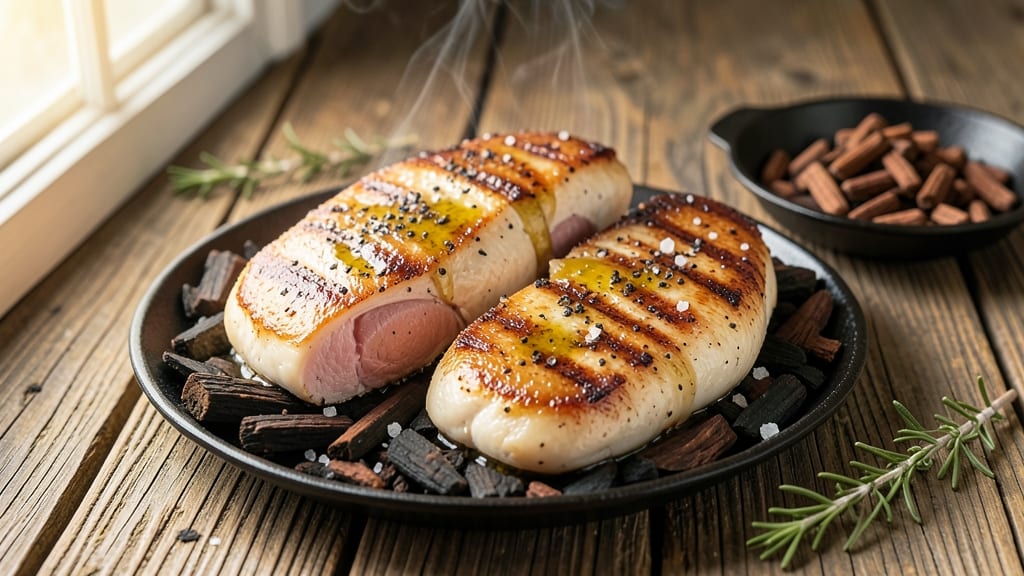
This Traeger chicken recipe turns weeknight dinners into restaurant-quality meals with minimal effort while mastering your smoker. After years of perfecting this technique—starting from my early days burning chicken on a gas grill—I’ve developed a method that delivers juicy, perfectly charred results every time.
The secret lies in precise temperature control and the right wood choice, which infuses each bite with deep, smoky flavor without overpowering the natural taste of the meat.
This recipe focuses on simplicity and professional results: just five essential ingredients, a one-hour cook time, and a foolproof approach that works for beginners and seasoned grill masters alike.
You’ll start with a dry brine to lock in moisture, then let the Traeger’s consistent heat work its magic while you handle the sides. The key is maintaining a steady 275°F temperature, which ensures tender meat with a beautiful bark.
By the time you’re done, you’ll have golden-brown, perfectly charred chicken that’s moist and flavorful all the way through. The smoky aroma alone will have everyone gathered around the table, and the tender meat will practically melt in your mouth.
This is the kind of dish that turns a simple dinner into a memorable experience—no fancy skills required.
Pair it with roasted vegetables or a fresh salad for a complete meal. The beauty of this recipe is its versatility: use it for family dinners, game day gatherings, or even meal prep. Here’s how to achieve restaurant-quality Traeger grilled chicken at home.
Ingredients for traeger chicken
Five simple ingredients transform your Traeger into a smoky masterpiece.
| Ingredient | Amount | Notes |
|---|---|---|
| Boneless, Skinless Chicken Breasts 🍗 | 1 ½ lb | Pounded to even thickness |
| Kosher Salt 🧂 | 1 ½ tbsp | Diamond Crystal preferred |
| Freshly Ground Black Pepper 🌶️ | 1 tsp | Freshly cracked for intensity |
| Hickory Wood Pellets 🌳 | 2 cups | For authentic smoky flavor |
| Extra-Virgin Olive Oil 🫒 | 2 tbsp | High-quality for moisture |
The chicken breasts are the star—look for plump, even-sized pieces at Whole Foods or your local butcher. Pounding them to ¼-inch thickness ensures even cooking. I always grab organic, free-range when possible, but conventional works too. The salt is non-negotiable: Diamond Crystal dissolves better than table salt. For the wood pellets, Traeger's own brand is reliable, but Lumberjack or CookinPellets are great alternatives. The olive oil should be fruity and peppery—avoid the cheap stuff that tastes like soap.
No hickory pellets? Apple or cherry wood adds sweetness, while mesquite brings intensity. Short on time? Pre-mix your dry brine (salt + pepper) in a bowl and toss the chicken in it the night before. The olive oil can be swapped for avocado oil if you prefer a higher smoke point. For extra flavor, add 1 tsp smoked paprika to the brine. The key is balance: too much wood overpowers, too little leaves you wondering what happened. Trust your nose—if it smells amazing, it'll taste amazing.
Store leftover chicken wrapped in foil for 3-4 days in the fridge. It reheats beautifully in a skillet with a splash of water. For meal prep, portion into airtight containers with a drizzle of olive oil to keep it moist. The wood pellets? Keep them in a cool, dry place—they last 6-12 months unopened. I always make a double batch of brine and store it in a jar for quick future use. The magic of this recipe is that it gets better the next day as the flavors meld.
Why You'll Love This Recipe
- Smoky Magic: The moment the chicken comes off the Traeger, it’s got this perfect balance: juicy inside, just a hint of crisp where the oil met the heat, and that deep, smoky hickory aroma that makes everything taste better. It’s the kind of flavor that makes people ask, “What did you do to it?” (Just tell them it’s a secret.)
- Weeknight to BBQ Star: This recipe works for everything—throw it on the Traeger for a quick weeknight dinner, bring it to a picnic, or serve it at a backyard cookout. Honestly, I’ve even used leftover slices in wraps the next day. It’s that adaptable.
- Leftovers That Don’t Suck: Unlike grilled chicken that dries out overnight, this stays tender and packed with flavor for days. I’ll chop up the rest for salads, toss it in pasta, or even make a quick chicken fried rice. (Yes, even on a Tuesday night.)
Step-by-step instructions for smoky char and juicy chicken
Here's how to transform simple ingredients into restaurant-quality Traeger chicken.
Prepare the Chicken for Maximum Flavor and Even Cooking
Begin by placing the 1.5 lb boneless, skinless chicken breasts between two sheets of plastic wrap. Using a meat mallet, pound them to an even ½-inch thickness throughout. This essential step ensures they cook uniformly without drying out. You'll notice the meat becomes more pliable as you work—this is normal and indicates proper preparation.
Next, season both sides aggressively with 1.5 tbsp kosher salt and 1 tsp freshly ground black pepper. Press the seasoning into the meat so it adheres completely. Here's the thing—this dry brine method works its magic while the chicken comes to room temperature, creating that perfect balance of seasoning throughout. Let the seasoned chicken rest uncovered on a plate for 30 minutes before cooking.
Set Up Your Traeger for Optimal Smoke and Temperature Control
Fill your Traeger with 2 cups hickory wood pellets—they'll deliver that authentic smoky flavor we're after. Preheat your grill to 300°F, which is ideal for achieving that perfect smoky char without drying out the chicken. I like to use the "Smoke" setting initially to establish a good smoke base, then switch to "Cook" once you're ready to place the chicken on the grates.
While the Traeger heats up, brush both sides of the chicken breasts generously with 2 tbsp extra-virgin olive oil. This creates a barrier that helps lock in moisture during cooking. The oil also promotes better browning and enhances the smoky flavor as it interacts with the wood pellets. Watch for the oil to absorb slightly after brushing—this indicates it's ready for the grill.
Smoke the Chicken to Juicy Perfection
Place the seasoned chicken breasts on the Traeger grates, skin-side down if they had skin (though ours doesn't). Close the lid and maintain the temperature at 300°F. This low-and-slow approach is key to developing that beautiful smoky flavor throughout the meat. You'll want to smoke the chicken for 45-50 minutes, flipping once after 25 minutes to ensure even cooking.
Here's where it gets interesting—the internal temperature should reach 160°F at the thickest part of the breast. Use a meat thermometer to check, inserting it horizontally into the side of the chicken to get an accurate reading. The meat should be opaque and no longer pink throughout. If you notice any areas browning too quickly, move them to a cooler part of the grill or reduce the temperature slightly.
Rest and Serve for Maximum Juiciness
Once the chicken reaches the proper internal temperature, remove it from the Traeger and transfer to a cutting board. Here's the critical part—let the chicken rest for 10-15 minutes before slicing. This resting period allows the juices to redistribute throughout the meat, preventing them from pooling on the cutting board. You'll notice the chicken will rise slightly as it rests, which is a good sign that everything is working properly.
After resting, slice the chicken against the grain into ½-inch thick pieces. The result should be perfectly juicy, smoky, and tender with a beautiful char on the outside. Serve immediately with your favorite sides—each bite should deliver that perfect balance of smoky flavor and succulent texture. The chicken will stay juicy for about 30 minutes after cooking, so don't wait too long to serve.
Pro Tips For Making Traeger Chicken
- Preheat with Pellets: Fire up the Traeger 20 minutes before adding chicken—hickory needs time to burn steady and fill the chamber with smoke. I used to rush this and ended up with uneven flavor; patience here means every bite tastes like a campfire.
- Salt Before Oiling: Season the chicken first with kosher salt (about 1 tsp per breast), then rub with olive oil—this locks in moisture better than oiling after. I learned this the hard way when my chicken turned out dry, no matter how long I smoked it.
- Skip the Crowding: Leave space between breasts on the grill—no overlapping. After burning three batches, I finally figured out that airflow is everything; crammed chicken steams instead of smokes, and the skin stays sad.
- Watch the Heat Zones: Start at 375°F for the first 10 minutes to sear, then drop to 275°F for even cooking—this guarantees a juicy center without drying out. My first attempt at low-and-slow all the way left me with gray, rubbery chicken. (Yes, I know, but trust the process.)
Regional styles of this recipe
Southern BBQ Style
In the South, Traeger chicken gets a bold twist with a dry rub made from 2 tbsp brown sugar, 1 tbsp smoked paprika, 1 tsp garlic powder, and ½ tsp cayenne pepper.
Apply this mix after your initial dry brine and smoke at 275°F for 50 minutes using hickory and cherry wood blend pellets. The caramelized crust pairs perfectly with tangy coleslaw or pickled jalapeños—this is my go-to for game day gatherings. 🌶️
Caribbean Jerk Twist
For a tropical flair, marinate your chicken in a blend of 2 tbsp jerk seasoning (I love Badia Jerk Seasoning), 1 tbsp lime juice, and 1 tbsp olive oil for 4 hours before smoking.
Use apple and pecan wood pellets at 250°F for 45 minutes. Serve with grilled pineapple slices and mango salsa—this version transports your taste buds straight to the islands. 🌴
Midwest Brined Classic
The Midwest approach focuses on simplicity with a wet brine of 1 cup buttermilk, 2 tbsp kosher salt, and 1 tbsp black pepper for 12 hours. Smoke at 275°F using oak pellets for 1 hour until golden.
This method creates incredibly tender meat that pairs beautifully with creamy mac and cheese or roasted sweet potatoes—perfect for family dinners. 🥔
Pacific Northwest Cedar-Kissed
Out west, they swear by cedar wood pellets which give a unique, woodsy flavor. Smoke your chicken at 260°F for 50 minutes after a simple seasoning of 1 tbsp salt, 1 tsp pepper, and 1 tsp dried thyme.
Serve with grilled asparagus and a dill yogurt sauce—this regional favorite highlights the natural sweetness of the chicken. 🌲
Texas-Style Smoked
In Texas, they take it to the next level with a dry rub of salt, pepper, and garlic powder followed by a 30-minute smoke at 300°F using post oak pellets.
The key here is to finish with a quick 2-minute direct flame over the hottest part of the grill for char. Serve on toasted brioche buns with sliced avocado—this version works perfectly as a sandwich or salad topping. 🍞
Nutrition facts
Frequently asked questions
Can I use this recipe with bone-in chicken thighs instead of breasts?
Bone-in thighs work beautifully on the Traeger—they stay juicier longer due to the fat content. Increase cooking time to 50-60 minutes at 275°F until internal temp hits 175°F. The skin will crisp up perfectly with the smoke, creating a flavorful crust. Just watch for flare-ups and move thighs if needed.
What's the best wood pellet choice for a milder smoky flavor?
For a lighter smoke profile, try apple or cherry wood pellets—they add subtle sweetness without overpowering. Avoid strong woods like mesquite unless you prefer bold, earthy notes. A 50/50 blend of hickory and fruitwood works perfectly for most palates. The key is balance: too much wood can make the chicken taste like campfire instead of restaurant-quality.
How do I fix chicken that's dry after cooking?
If your chicken turns out dry, the issue is usually overcooking or skipping the rest. Next time, check internal temp at 160°F and rest for 10-15 minutes before slicing. For immediate rescue, slice the chicken thinly and serve with a sauce or gravy to add moisture. The dry brine method in this recipe prevents dryness when done correctly—just don't rush the process.
Can I make this recipe ahead of time for meal prep?
Yes! Cook the chicken, let it cool completely, then store in airtight containers for up to 4 days in the fridge. Reheat gently in a skillet with 1 tbsp olive oil over medium-low heat for 2-3 minutes per side. For freezing, wrap portions tightly and store for 2 months. The smoky flavor actually intensifies slightly when reheated properly.
What sides pair best with Traeger grilled chicken?
For a complete meal, try smoky mac and cheese, grilled corn on the cob, or a cucumber-avocado salad. The charred flavor works especially well with creamy sides that contrast the smokiness. For a lighter option, serve with roasted Brussels sprouts and warm dinner rolls. The key is balancing textures—something crispy, creamy, or fresh complements the tender chicken perfectly.