
Salads
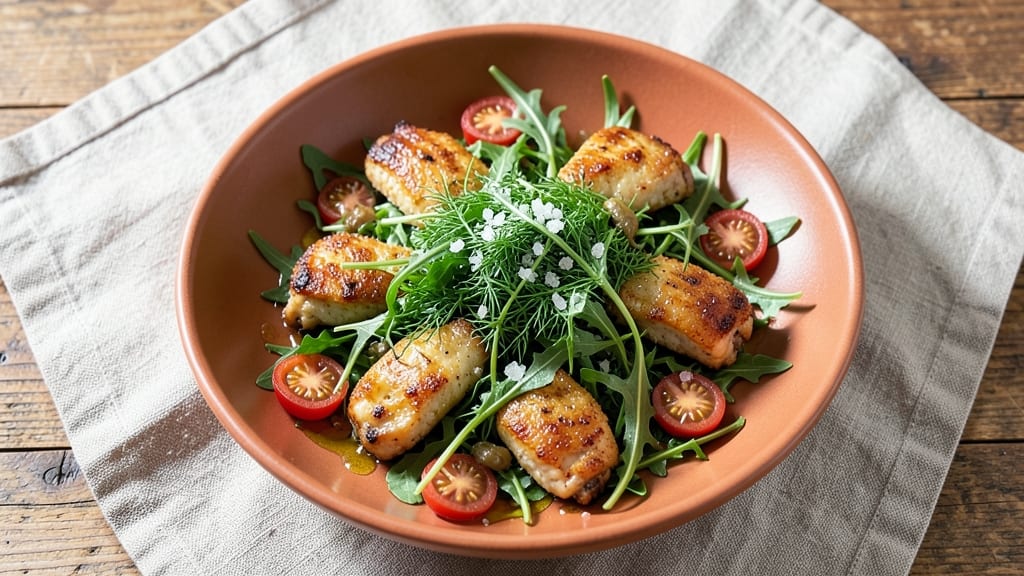
This crispy chicken gizzard salad transforms what many consider offal into a restaurant-worthy dish that balances rich protein with bright, tangy flavors. Growing up in small-town Georgia, I learned how versatile game birds could be when prepared with care—this recipe proves that even less common cuts deserve attention.
The key lies in proper pan-searing to achieve that satisfying crunch while keeping the centers tender.
Most recipes either overcook the gizzards or leave them bland, but this method delivers golden, crispy edges with a tender interior, all while maintaining a clean, herbaceous profile. A zesty lemon-dill dressing cuts through the richness, creating a perfect balance that makes this salad both hearty and refreshing.
It’s the kind of dish that elevates simple ingredients into something extraordinary.
What sets this recipe apart is the technique: quick searing in high-heat cast iron (I swear by my vintage pieces) followed by a bright dressing that clings to every crispy bite. The result is a salad that’s bold enough for a weeknight dinner but elegant enough for entertaining.
Ready in under 30 minutes, it’s perfect for those who want restaurant-quality results without the fuss.
Pair it with crusty bread or a simple green salad for a complete meal, or serve it as a stand-alone dish when you want something hearty yet light. The crispy texture and tangy dressing make it addictive—once you try it, you’ll never think of gizzards the same way again.
Ingredients for chicken gizzard salad
Gamey protein meets crispy crunch with a tangy dressing—simple but restaurant-worthy ingredients.
| Ingredient | Amount | Notes |
|---|---|---|
| Chicken Gizzards 🍗 | 1 ½ lb | Fresh, cleaned, trimmed |
| Extra-Virgin Olive Oil 🫒 | ½ cup | High smoke point for searing |
| All-Purpose Flour 🌾 | ½ cup | For dredging gizzards |
| Fresh Dill 🌿 | ¼ cup | Chopped, stems removed |
| Fresh Parsley 🌿 | ¼ cup | Chopped, for brightness |
| Garlic Cloves 🧄 | 4 cloves | Minced, for dressing |
| Lemon Juice 🍋 | ½ cup | Freshly squeezed |
| Dijon Mustard 🍯 | 1 tbsp | For dressing depth |
| Honey 🍯 | 2 tbsp | For dressing balance |
| Red Wine Vinegar 🍷 | 1 tbsp | For tangy kick |
| Salt 🧂 | 1 ½ tsp | Kosher or sea salt |
| Black Pepper 🌶️ | ½ tsp | Freshly ground |
| Mixed Greens 🥬 | 6 cups | Butter lettuce or spring mix |
| Crumbled Feta Cheese 🧀 | ½ cup | Optional, for creaminess |
Gizzards are the star here, so pick the freshest you can find—they should smell clean, not fishy. Local butchers or specialty meat counters are your best bet for quality. Trim any visible fat or connective tissue before cooking. The flour is just for dredging—no need for anything fancy. If you're nervous about handling gizzards, gloves are a must. I usually buy mine from Whole Foods or my local butcher shop, where they're cleaned and ready to cook. Look for bright color and firm texture—those are your clues to freshness.
No fresh dill? Dried works at one-third the amount, but it won't have the same punch. Short on honey? Maple syrup or agave keeps the dressing balanced. The dressing can be made a day ahead—it actually tastes better after the flavors meld. For the greens, butter lettuce or spring mix stays crisp longer than iceberg. If you're feeling fancy, add toasted walnuts or pepitas for crunch. The feta is optional but adds a nice contrast—skip it if you're avoiding dairy. The key is the sear: cast iron is ideal, but a heavy skillet works too.
The dressing keeps for 5 days in the fridge, but the greens only stay crisp for 2 days—make it fresh if you can. Store the cooked gizzards separately and reheat them gently before tossing with the salad. The whole dish reheats beautifully—just warm the gizzards and dressing separately, then combine. Portion it out in jars for easy lunches, or serve it immediately for that restaurant-quality crunch. Leftovers? Toss them into a grain bowl for a hearty meal the next day.
Why You'll Love This Recipe
- One-Pan Magic: No last-minute scrubbing or endless cleanup—just a skillet, a bowl, and a spatula. The gizzards get their golden crust in batches, while the dressing and greens stay separate until the very end. My kitchen looks like it after a 15-minute meal, not a 3-course event.
- Chef’s Kiss Crunch: That flour-dredged sear? It’s the difference between “meh” and “holy moly.” The crispy edges paired with the bright lemon-Dijon dressing make each bite feel like a little victory. My daughter still asks for seconds, even though she pretends to gag at the word “gizzard.”
- Budget Win: For the price of a takeout salad, you get protein that’ll keep you full for hours. That 1.5 lb of gizzards? It’s cheaper than chicken thighs, and the texture—once you get it right—is way more interesting. I’ve fed a crowd for under $10 with this.
- Weeknight Rescue: I made this last Tuesday when I forgot to meal prep. The gizzards seared in 10 minutes while I prepped the dressing, and boom—dinner was on the table. Store the dressing separately, toss with greens right before serving, and you’ve got a meal that feels fancy but takes less time than ordering pizza.
Step-by-step instructions for crispy pan-seared bites with tangy herb dressing
Here's how to turn tough gizzards into crispy, golden bites with a bright dressing.
Prep the Gizzards for Perfect Crispiness
Start by trimming any excess fat or connective tissue from the 1½ lb chicken gizzards—this helps them cook evenly. Pat them completely dry with paper towels; any moisture will prevent that crispy crust we're after. Place them in a bowl and season generously with 1½ tsp salt and ½ tsp black pepper, rubbing it into every surface. Let them sit at room temperature for 15-20 minutes while you prep the rest.
Real talk: If you skip the drying step, you'll end up with steamed gizzards instead of crispy ones. Trust me, it makes all the difference. While they rest, measure out the ½ cup all-purpose flour in a shallow dish—this will be our dredge for that golden crust.
Create the Tangy Herb Dressing
In a small bowl, whisk together the ½ cup lemon juice, 1 tbsp Dijon mustard, 2 tbsp honey, and 1 tbsp red wine vinegar until smooth. This is the base of our dressing, and it's where the bright, tangy flavors come together. In a separate small bowl, finely chop the ¼ cup fresh dill and ¼ cup fresh parsley, then stir them into the dressing along with the 4 minced garlic cloves. Taste and adjust seasoning—you might want to add a pinch more salt or a splash of lemon juice to balance the sweetness.
Here's the thing—this dressing should coat the back of a spoon but still be pourable. If it's too thick, whisk in a teaspoon of ½ cup lemon juice. The herbs will brighten up the rich gizzards perfectly, so don't skip this step.
Pan-Sear the Gizzards Until Crispy
Heat ½ cup extra-virgin olive oil in a large skillet over medium-high heat until it shimmers but doesn't smoke. Working in batches to avoid crowding, dredge each gizzard in the ½ cup all-purpose flour, shaking off any excess, then carefully add them to the hot oil. Cook undisturbed for 3-4 minutes per side until they're deep golden brown and crispy—you'll know they're ready when they release easily from the pan.
Don't walk away during this step. The gizzards will go from golden to burned in seconds if you're not paying attention. Once all the gizzards are cooked, transfer them to a paper towel-lined plate to drain any excess oil. They'll stay crispy while you assemble the rest.
Assemble the Salad
In a large bowl, combine the 6 cups mixed greens with the crispy gizzards. Drizzle the tangy herb dressing evenly over the top, tossing gently to coat everything. If you're using the ½ cup crumbled feta cheese, sprinkle it over the salad just before serving—this keeps it from getting soggy from the dressing.
This is where it all comes together. The crispy gizzards contrast perfectly with the fresh greens and bright dressing. Serve immediately while the gizzards are still crispy and the dressing is fresh. If you're making this ahead, assemble everything except the dressing and store it separately—toss just before serving to keep the gizzards crisp.
Pro Tips For Making Chicken Gizzard Salad
- Salt and Rest Gizzards: Rub the gizzards with 1½ tsp salt and ½ tsp black pepper before dredging—don’t just sprinkle. Let them sit 15-20 minutes at room temp while you prep the flour and dressing. I learned this the hard way—skipping the rest means uneven cooking and a bland flavor, even if they look golden.
- Shake Off Excess Flour: After dredging the gizzards in ½ cup flour, give them a firm shake over the bowl so only a thin, even layer sticks. Too much flour steams them instead of crisping—you want that crust to be light but sturdy. Trust me, the difference between "meh" and "wow" is in those few seconds of shaking.
- Watch the Oil Heat: The ½ cup extra-virgin olive oil should shimmer but not smoke—medium-high heat is key. If it’s smoking, the gizzards will burn before they crisp. Test with a tiny piece of flour: if it sizzles immediately but doesn’t brown in 30 seconds, you’re ready. (Yes, even if you’re impatient like me.)
- Dressing First, Greens Last: Toss the 6 cups mixed greens with the crispy gizzards before adding the dressing—this keeps the greens from wilting under the lemon. Save the ½ cup crumbled feta for the very end if using it; sprinkling it last prevents soggy cheese. Assemble everything just before serving, or the gizzards lose their crunch.
Essential equipment for chicken gizzard salad
Cast Iron Skillet
My vintage Lodge 12-inch cast iron skillet is non-negotiable for this recipe—it retains heat like nothing else and gives those gizzards that perfect golden crust. I’ve got a collection of 47 pieces, but this one’s my go-to for searing.
If you don’t have cast iron, a heavy stainless steel or enameled skillet will work, but you’ll need to crank up the heat a bit to get that same crispy result.
Pro tip: Season your skillet well before using it—rub it with high-smoke-point oil and bake it at 450°F for an hour to create a natural non-stick surface. 🔥
Digital Meat Thermometer
A ThermoWorks Smoke or Meater Plus thermometer is a game-changer for checking internal temps without overcooking. For gizzards, you want them to hit 160°F internal temperature—any higher, and they’ll turn dry.
I keep one probe in the skillet to monitor oil temperature and another in the thickest gizzard to ensure perfect doneness. No thermometer? Use the window-pane test: press the side of a gizzard—if it jiggles like jelly, it’s done. 🌡️
Heavy-Duty Tongs
Stainless steel tongs are essential for flipping those gizzards without crushing them. I swear by OXO Good Grips—they’ve got the right balance of grip and flexibility to handle the flour crust without tearing. Avoid forks—they’ll poke holes in your crispy coating.
And if you’re working with a crowd, grab a second pair so you can flip without crowding the pan. Trust me, this makes all the difference in even cooking. 💪
Shallow Mixing Bowl
For dredging the gizzards, a wide, shallow bowl (like a pie plate) is ideal—it lets the flour coat evenly without sticking. I repurpose vintage glass bowls from my grandmother’s kitchen, but any non-reactive material works.
Just avoid plastic—it can absorb flavors and leave a weird taste. Keep the bowl nearby while you sear so you can quickly dredge the next batch. 🍽️
Paper Towels & Wire Rack
After searing, I transfer the gizzards to a double-layered paper towel on a wire rack to drain excess oil. This keeps them crispy while you assemble the salad. If you’re short on time, a wire cooling rack over a plate works too—just make sure it’s elevated so air can circulate.
I’ve learned the hard way that stacking them directly on a plate turns them soggy. Pro move: Use a rack that fits inside your skillet for easy transfer. 🧹
Nutrition facts
Frequently asked questions
Why do the gizzards need to rest before cooking?
Letting the 1½ lb chicken gizzards sit at room temperature for 15-20 minutes after seasoning helps them cook more evenly. This step ensures the seasoning adheres properly and prevents a soggy crust when searing. Skipping it can turn crispy gizzards into steamed ones—trust the process!
Can I use dried herbs instead of fresh dill and parsley?
Yes! If you don’t have fresh herbs, use 1 tablespoon dried dill and 1 tablespoon dried parsley (about one-third the amount of fresh). While it won’t be as vibrant, it’ll still add great flavor to the tangy dressing. Just whisk in a splash of water to thin it out if needed.
How do I keep the gizzards crispy after cooking?
Transfer the cooked gizzards to a double-layered paper towel on a wire rack to drain excess oil. Avoid stacking them directly on a plate—they’ll lose their crispness. Serve immediately or reheat gently in the oven (not the microwave) to restore that golden crunch.
Can I make this salad ahead of time?
Yes, but with a twist! Assemble the salad without the dressing and store it separately. Toss with the dressing just before serving to keep the gizzards crisp. The dressing keeps for 5 days in the fridge, but the greens stay freshest for 2 days. Make it fresh whenever possible for the best texture!
What if my gizzards aren’t as crispy as I’d like?
Double-check your searing technique: ensure the oil is shimmering but not smoking and cook undisturbed for 3-4 minutes per side. If they’re still soft, try increasing the heat slightly next time. A cast iron skillet is ideal, but any heavy pan will work—just monitor closely!